
 home
home
 Published: May 29, 2026 01:18 PM
 Page View: 106
Hong Kong, May 2026 – As large-scale manufacturing facilities continue to expand in size and complexity, the role of SCADA (Supervisory Control and Data Acquisition) systems has become increasingly critical. These systems serve as the central nervous system of modern factories, enabling real-time monitoring, control, and data acquisition across thousands of connected devices. Easy Semiconductor Technology (Hong Kong) Limited, a leading provider of industrial automation solutions, emphasizes that optimizing SCADA performance is essential for ensuring operational efficiency, reducing downtime, and supporting smart factory transformation. In large factories, SCADA systems are responsible for collecting data from PLCs, sensors, and field devices, then presenting it in a unified interface for operators and engineers. However, as the number of connected devices increases, SCADA systems often face performance challenges such as data bottlenecks, delayed responses, network congestion, and excessive server load. Without proper optimization, these issues can significantly reduce system effectiveness and compromise decision-making speed. In modern industrial environments, SCADA is more than just a monitoring tool—it is a strategic platform for production management. Real-time data visualization allows operators to respond quickly to anomalies, optimize production flow, and reduce operational risks. When SCADA performance is degraded, even small delays in data updates can lead to inefficient control decisions, production errors, or equipment downtime. Industries such as semiconductor manufacturing, automotive production, energy distribution, and chemical processing rely heavily on SCADA systems to maintain continuous operations. In these environments, milliseconds can matter, especially when coordinating high-speed production lines or managing safety-critical processes. Several factors can impact SCADA system efficiency in large factories: High data volume from thousands of sensors and controllers can overwhelm system bandwidth and processing capacity. Understanding these challenges is essential for developing effective optimization strategies. Easy Semiconductor Technology (Hong Kong) Limited recommends a structured approach to improving SCADA performance across industrial environments: 1. Optimize Network Architecture 2. Implement Data Filtering and Prioritization 3. Use Distributed SCADA Architecture 4. Optimize Database Performance 5. Upgrade Communication Protocols 6. Reduce Unnecessary Polling 7. Implement Edge Computing Solutions Easy Semiconductor Technology has implemented SCADA optimization projects across various industries. In one large semiconductor fabrication plant, the SCADA system struggled with delayed data visualization due to excessive sensor inputs. By introducing a distributed architecture combined with edge computing nodes, system response time improved by over 40%, enabling faster decision-making and reducing production delays. In another automotive manufacturing facility, network congestion caused intermittent SCADA communication delays. After segmenting the network and implementing OPC UA-based communication, the plant achieved significantly improved system stability and real-time data accuracy. As factories evolve toward Industry 4.0, SCADA systems are increasingly integrated with IoT platforms, AI analytics, and cloud computing systems. This transformation enables predictive maintenance, automated decision-making, and advanced production optimization. However, these enhancements also increase system complexity, making performance optimization even more critical. Easy Semiconductor Technology continues to support manufacturers in building next-generation SCADA systems that combine high performance, scalability, and intelligent data management. By leveraging modern technologies and best engineering practices, companies can unlock the full potential of digital manufacturing. The future of SCADA systems lies in greater decentralization, intelligence, and connectivity. Artificial intelligence will play a key role in analyzing SCADA data in real time, while cloud-based platforms will enable global monitoring and control capabilities. At the same time, cybersecurity and system resilience will become increasingly important as industrial systems become more interconnected. Easy Semiconductor Technology (Hong Kong) Limited remains committed to delivering advanced SCADA optimization solutions that help manufacturers achieve higher efficiency, improved visibility, and stronger operational control in large-scale industrial environments. Easy Semiconductor Technology (Hong Kong) Limited specializes in industrial automation, SCADA system integration, and advanced manufacturing solutions. The company provides innovative technologies and engineering expertise to help global manufacturers improve efficiency, reliability, and competitiveness in the era of smart industry.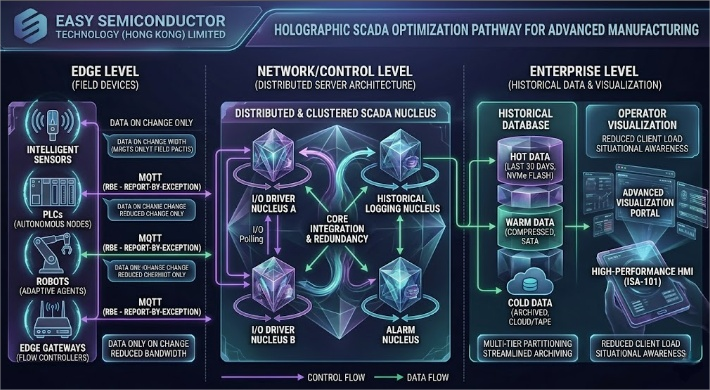
The Importance of SCADA Optimization in Large-Scale Operations
Key Challenges Affecting SCADA Performance
Poor network architecture leads to latency and packet loss, affecting real-time monitoring accuracy.
Inefficient database design slows down data storage and retrieval operations.
Legacy hardware and outdated communication protocols limit system scalability.
Excessive polling frequency from SCADA to field devices increases unnecessary network load.Best Practices for Optimizing SCADA Performance
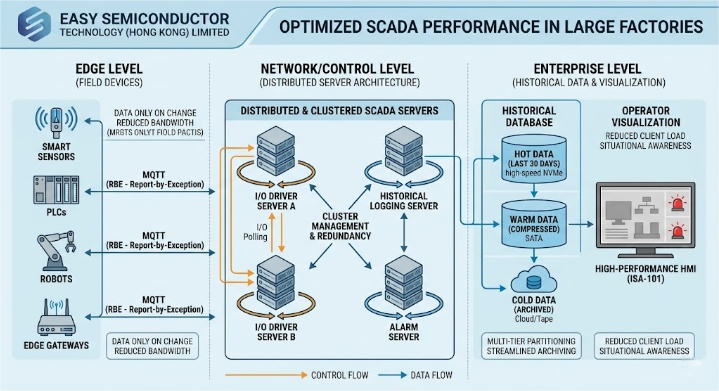
A well-designed industrial network is the foundation of SCADA performance. Segmenting networks into functional zones, using managed switches, and implementing redundant communication paths can significantly reduce congestion and improve reliability. High-speed industrial Ethernet is preferred for large-scale deployments.
Not all data points require real-time updates. By filtering non-critical data and prioritizing essential signals, SCADA systems can reduce processing load and improve response times. Event-driven data reporting is more efficient than continuous polling in many applications.
Instead of relying on a single centralized server, distributed SCADA systems spread processing tasks across multiple nodes. This improves scalability, enhances fault tolerance, and reduces the risk of system overload in large factories.
Efficient database design is critical for handling large volumes of industrial data. Techniques such as data compression, indexing, and time-series database optimization help improve query speed and reduce storage overhead.
Modern industrial protocols such as OPC UA, MQTT, and EtherCAT provide faster, more secure, and more scalable communication compared to legacy systems. These protocols also support better integration with IoT and cloud platforms.
Excessive polling of field devices can create unnecessary network traffic. Switching to event-based communication or adaptive polling intervals helps reduce bandwidth consumption and improves system efficiency.
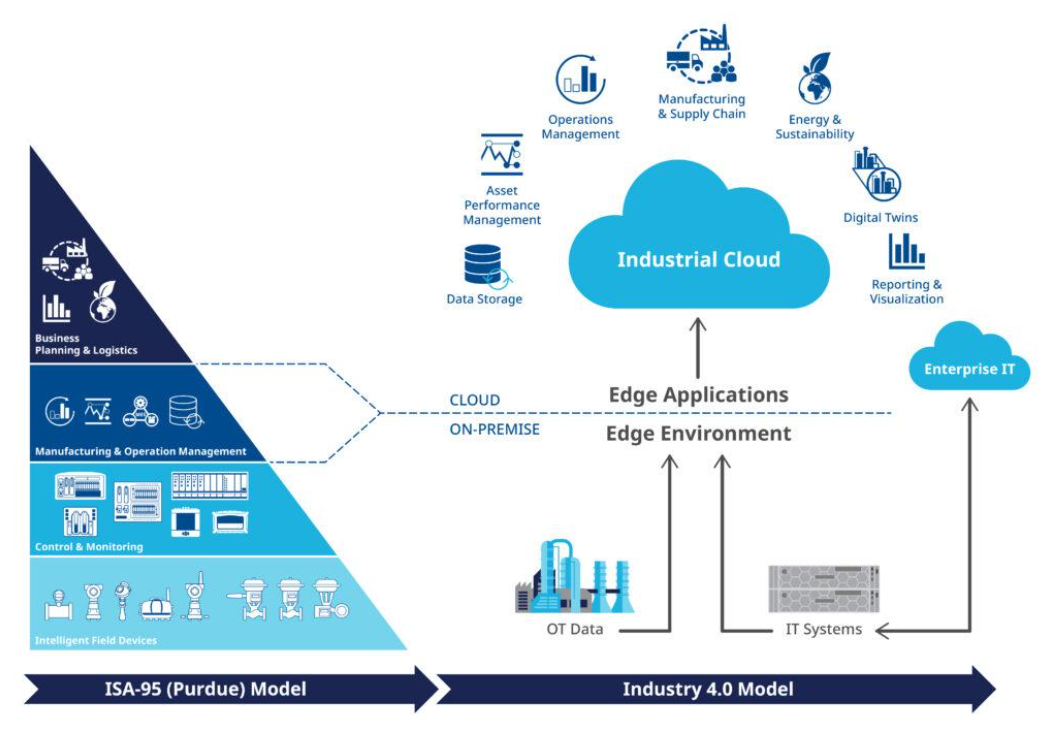
Edge computing allows data processing to occur closer to the source, reducing the load on central SCADA servers. By performing preliminary analysis at the edge, only relevant data is transmitted to the central system, improving overall performance.Real-World Industrial Applications
The Role of SCADA in Smart Factories
Future Outlook
About Easy Semiconductor Technology (Hong Kong) Limited