
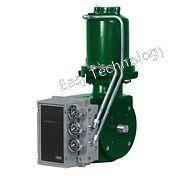
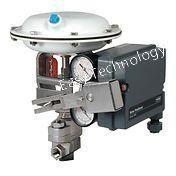
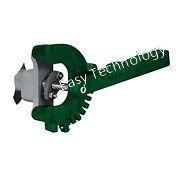
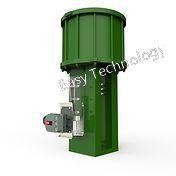
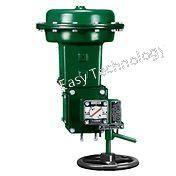
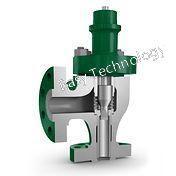
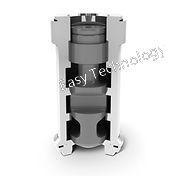
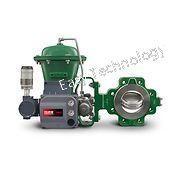
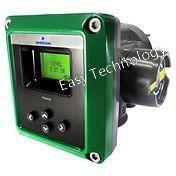
Specifications:
Model: 3610JP Pilot-Operated Safety Relief Valve
Design Standard: JIS B 8210 (Spring-loaded and Pilot-Operated Safety Valves for Steam Boilers and Pressure Vessels)
Operation Type: Pilot-Operated
Main Valve Specifications:
Valve Size: Common JIS sizes (e.g., 50A, 65A, 80A, 100A, 125A, 150A)
Pressure Rating: JIS pressure classes (e.g., 10K, 16K, 20K, 30K, 40K)
End Connections: JIS Flanges (e.g., JIS 10K, 16K, 20K RF flange facing)
Orifice Area: Designed to meet JIS capacity requirements for specific sizes and set pressures.
Pilot Specifications:
Pilot Type: Typically a standard pilot for steam service. Other pilots (e.g., for liquid) may be available.
Set Pressure Range: Defined based on the JIS pressure class of the valve.
Performance Characteristics:
Accumulation (Overpressure): Typically 3% for steam (per JIS B 8210).
Blowdown: Adjustable, typically around 4-7%.
Relieving Capacity: Certified per JIS B 8210 standards.
Materials of Construction:
Main Valve Body: SCPH 2 Cast Steel (equivalent to WCB) is standard for JIS valves.
Piston & Seat: Stainless Steel.
Pilot: Stainless Steel and Brass.
Specifications:
Model: 3660 Pilot-Operated Safety Relief Valve
Operation Type: Pilot-Operated
Standards: Designed in accordance with ASME Boiler and Pressure Vessel Code, Section VIII.
Main Valve Specifications:
Valve Size: 1D2 through 4L6 (Inlet sizes typically from 1" to 6")
Pressure Class: ANSI 150 through 2500
End Connections: Flanged (RF, RTJ), Butt-Weld
Orifice Designations: D through T (per ASME/API standards)
Temperature Range: -268° to 538°C (-450° to 1000°F) [Dependent on pilot and body material]
Pilot Specifications:
Pilot Types:
Standard Pilot: For general purpose gas, vapor, and steam service.
Liquid Service Pilot: Specifically designed for liquid applications.
Balanced Piston Pilot: For applications with high backpressure.
Bellows Seal Pilot: For services where the pilot sensing line could freeze or become clogged.
Vapor Dome Pilot: For precise set pressure in low-pressure applications.
Set Pressure Range: Varies by pilot type, from a few psig to over 6000 psig.
Performance Characteristics:
Relieving Capacity: Certified capacities per ASME Section VIII. Specific capacity is determined by orifice size, set pressure, and fluid.
Blowdown: Adjustable, typically 2-7% for standard pilots.
Overpressure: Standard setting is 3% for compressible fluids, 10% for most liquids (per ASME code).
Backpressure Tolerance:
Standard: Limited built-in backpressure capability.
Balanced: High backpressure capability (up to 50% of inlet pressure or more) with a balanced piston pilot.
Materials of Construction:
Main Valve Body: Carbon Steel (WCB) [Standard], Stainless Steel (CF8M), Alloy Steels (WC6, WC9).
Piston & Seat: 316 Stainless Steel, with optional hardened trim.
Pilot Body: 316 Stainless Steel, Brass.
Specifications:
Type: Manual Quarter-Turn Actuator
Operation: 90° rotation (quarter-turn)
Mounting: Directly onto the standard mounting pad of Fisher and other compliant ball and plug valves.
Position Indication: Clear Open/Closed indicators on the lever and base.
Torque & Physical Data:
Torque Output: The output torque is a function of the force applied by the operator and the length of the lever. It is designed to handle the typical breakaway and running torque of the valves it is mounted on.
Lever Length: Varies by model to provide different levels of mechanical advantage. Common lengths are in the range of 10 to 24 inches (250 to 600 mm).
Weight: Lightweight, typically a few kilograms/pounds, depending on size and material.
Materials of Construction:
Lever & Body: Ductile Iron (standard, coated for corrosion protection), Aluminum (lightweight, good for non-corrosive areas), or Stainless Steel (for highly corrosive environments).
Locking Mechanism: Hardened Steel for durability and wear resistance.
Hardware: Stainless Steel.
Locking Features:
Locking Positions: Open, Closed. Some models may allow locking in intermediate positions.
Padlock Holes: Typically designed to accommodate up to three padlocks to comply with multi-person LOTO safety protocols.
Compatible Valves:
Fisher V100, V200, V300 Ball Valves
Fisher A, AF, AP Plug Valves
Other quarter-turn valves with ISO 5211 mounting pad standards.
Specifications:
Model: 685 Level Controller
Measurement Principle: Buoyancy / Torque Tube
Output Signals:
Pneumatic: 20 to 100 kPa (3 to 15 psig)
Electronic: 4 to 20 mA DC, HART protocol
Enclosure Rating: NEMA 4 (Weatherproof), NEMA 7 (Explosion-Proof for electronic versions)
Process Connection & Capacity:
Chamber Size: Standard displacer lengths available from 14 in to 120 in (355 mm to 3048 mm).
Process Connection: Typically 2-inch or 3-inch NPT or flanged cage connections.
Displacer Size: Various diameters available to match specific buoyancy force requirements and density.
Process Conditions (Dependent on Model & Materials):
Pressure Rating:
Standard: Up to ANSI Class 600 (1440 psig @ 100°F)
High-Performance: Up to ANSI Class 2500 (6000 psig @ 100°F)
Temperature Range:
Standard: -20° to 400°F (-29° to 204°C)
High-Performance: -20° to 800°F (-29° to 427°C)
Performance:
Accuracy: Typically ±1% of span.
Dead Band: Typically less than 0.5% of span.
Span Adjustment: Field-adjustable.
Materials of Construction:
Cage / Chamber: Carbon Steel (standard), Stainless Steel, Alloy Steel.
Displacer: 316 Stainless Steel (standard), other alloys available.
Torque Tube: 316 Stainless Steel, Inconel, or other high-strength alloys for high-temperature service.
Control Capability (with Integral Pilot):
Control Actions: Direct or Reverse acting (configurable).
Proportional Band: Field adjustable.
Specifications:
Model: 1078 (Spring-Return), 1078D (Double-Acting)
Type: Piston Actuator, Scotch-Yoke design
Action: Spring-Return (1078) / Double-Acting (1078D)
Standard Travel: 90° and 180° rotation (other angles available)
Air Supply Pressure Range: 3.0 to 8.6 bar (40 to 125 psig) for spring-return models. Up to 10.3 bar (150 psig) for double-acting.
Ambient Temperature Range: -20° to 85°C (-4° to 185°F) with standard lubricant. Optional lubricants available for lower temperatures.
Mounting Position: Any position. Mounting base can be rotated in 5° increments.
Torque & Spring Output:
Torque Output: Available in multiple spring ranges to provide specific breakaway and running torque values. Output is a function of air supply pressure and spring size.
Example: A typical 1078 size 90 actuator can produce a spring-end torque of over 4,000 Nm (3,000 lb-ft).
Spring Ranges: Multiple spring packs are available to match the specific torque requirements of the valve.
Physical Data (Typical for a Size 90):
Body Material: Anodized Aluminum
Piston Rod & Yoke: Hardened Steel
Weight: Varies significantly with size and spring configuration. Can range from approx. 70 kg (150 lbs) to over 450 kg (1,000 lbs) for the largest units.
Accessories & Options:
Positioners: Fisher FIELDVUE™ DVC or other types can be mounted for modulating control.
Limit Switches: Proximity or mechanical switches to indicate valve position.
Solenoid Valves: Used for direct electrical control of the air supply, essential for ESD applications.
Air Filter Regulators: To clean and regulate the air supply.
Manual Override: Handwheel or lever for manual operation in case of air failure.
Weather & Explosion Proofing: NEMA 4, NEMA 7 (explosion-proof) enclosures for accessories.
Parameter Description
Applicable Valve Types Fisher Globe Valves (e.g., ED, ES, HP, and others)
Trim Type Multi-stage, drilled-hole stacked plate trim.
Primary Function Cavitation Control & Erosion Reduction.
Flow Characteristic Linear (inherent to the multi-stage design).
Shut-Off Class Dependent on the specific plug and seat arrangement of the main valve. Typically ANSI Class IV or better with metal seats.
Liquid Pressure Recovery Factor (FL) Very high (approaches 1.0), indicating excellent resistance to cavitation.
Materials of Construction (Typical):
Cage/Trim Stack: 316 Stainless Steel (standard), 17-4PH Stainless Steel, or other hardened alloys.
Plug: 17-4PH SST, Stellite-faced, or Tungsten Carbide for extreme service.
Seat Ring: 316 SST, Stellite-faced.
Typical Applications:
Micro-Flat trim is specified for severe liquid services where cavitation is a known problem, such as:
Boiler Feedwater Pump Recirculation (BFP Recirc)
High-Pressure Letdown Services
Condensate Recirculation
Water Injection Wellhead Choke Valves
Chemical Plant Pressure Letdown
Any application with a high ΔP where the outlet pressure remains above the liquid's vapor pressure.
Specifications:
Valve Size: 2" to 16" (DN 50 to DN 400)
Pressure Class: ANSI 150 through 2500
End Connections: Flanged (RF, RTJ), Butt-Weld
Temperature Range: -29° to 427°C (-20° to 800°F) [Depends on seal materials]
Performance & Flow Characteristics:
Shut-Off Class:
Standard: ANSI Class V (Metal-to-metal seat)
Optional: ANSI Class VI (With soft seal)
Flow Characteristic: Equal Percentage (Standard)
Rangeability: Up to 75:1
Flow Coefficient (Cv): High Cv values. Specific values depend on valve size, trim, and pressure drop.
Noise Reduction: Capable of reductions up to 50 dBA.
Cavitation Protection: Designed to operate cavitation-free across its entire operating range.
Materials of Construction:
Body & Cover: Carbon Steel (WCB), Stainless Steel (CF8M/316), Alloy Steels (WC6, WC9, C12A)
Rotor & Shaft: 17-4PH Stainless Steel (standard), with optional hard facings (e.g., Stellite, Tungsten Carbide) for extreme erosion resistance.
Seat Ring: 316 Stainless Steel (standard), Stellite, other hardened alloys.
Diffuser Stack: 316 Stainless Steel.
Actuator & Accessories:
Actuator Types: Requires a robust rotary actuator due to potential high dynamic torques.
Pneumatic: Fisher 1051/1052 SRD Piston Actuators are commonly specified.
Electric: Electric Motor Actuators are also an option.
Positioner: A Fisher FIELDVUE™ DVC digital positioner is highly recommended for precise control, diagnostics, and to manage the high-performance capabilities of the valve.
Accessories: Limit switches, solenoid valves, supply pressure regulators, etc.
Specifications:
Valve Size: 2" to 16" (DN 50 to DN 400)
Pressure Class: ANSI 150, 300
End Connections: Wafer, Lugged, Double Flanged
Temperature Range: -40° to 400°F (-40° to 204°C) [Dependent on seat material]
Performance & Flow Characteristics:
Shut-Off Class: ANSI Class VI (Bubble-tight)
Flow Characteristic: Equal Percentage (inherent, characterized by the disc notch)
Rangeability: Up to 100:1
Flow Coefficient (Cv): Very high Cv for its size. Specific values are determined by valve size and disc notch characterization.
Pressure Recovery: High, similar to a butterfly valve.
Leakage: ANSI FCI 70-2 Class VI.
Materials of Construction:
Body: Ductile Iron (standard), Carbon Steel (WCB), Stainless Steel (CF8M/316)
Disc: 316 Stainless Steel (standard), with optional hard coatings (e.g., Stellite, Colmonoy) for abrasive service.
Shaft: 17-4PH Stainless Steel (standard)
Seat Rings: Resilient materials such as PTFE (TFE), RPTFE, UHMW-PE, and PEEK to handle various temperatures and chemical compatibilities.
Actuator & Accessories:
Actuator Types: Compatible with all Fisher rotary actuators.
Pneumatic: Spring-and-Diaphragm Actuators (for modulating control), Piston Actuators (for on/off or high-performance modulating).
Electric: Electric Motor Actuators.
Positioner: A Fisher FIELDVUE™ DVC digital positioner is highly recommended for precise modulating control and to take full advantage of the valve's characterized performance and diagnostic capabilities.
Accessories: Limit switches, solenoid valves, filter regulators, etc.
Specifications:
Model: FIELDVUE DLC3100 SIS Digital Level Controller
Certification & Standards: IEC 61508:2010, suitable for use in SIFs up to SIL 2 (Hardware), with systematic capability up to SIL 3. Compliant with IEC 61511.
Safety Authority Approval: TÜV Rheinland.
Power Supply: 18 to 32 V DC (from a safety-certified power supply)
Ambient Temperature Range: -40° to 75°C (-40° to 167°F)
Enclosure Rating: NEMA 4X / Type 6P / IP67
Measurement & Performance:
Measurement Technology: Guided Wave Radar (Tuned Waveguide)
Measurement Range: Up to 6 meters (20 feet)
Accuracy: ±3 mm (±0.12 in) or 0.1% of selected range, whichever is greater.
Safety Output & Function:
Safety Output Type: Two (2) independent, solid-state digital outputs configurable for De-energize-to-Trip (normally energized).
Output Rating: 30 V DC, 0.5 A max per output.
Function: Monitors level and, upon reaching a pre-set safety trip point, opens the digital outputs to de-energize the downstream safety device (e.g., a solenoid valve), causing the final element (e.g., a shut-off valve) to go to its safe state.
Safety Integrity Parameters (Critical for SIS Design):
Hardware Fault Tolerance (HFT): 1
Safe Failure Fraction (SFF): > 90%
Probability of Failure on Demand (PFD): Low (Specific PFD values are provided in the official FMEDA report and are dependent on proof test intervals. Typical PFDavg can be in the range of 0.001 to 0.0001 for a single device).
Proof Test Interval: Recommendations are provided in the product manual to maintain the designed Safety Integrity Level.
Materials & Process Connection:
Process Connection: 2-inch NPT or other flanged connections.
Probe Material: 316L Stainless Steel (standard).
Specifications:
Model: FIELDVUE DLC3100 Digital Level Controller
Communication Protocol: HART 5/7 (Analog 4-20 mA with digital overlay)
Power Supply: 16.5 to 42 V DC (Loop Powered)
Ambient Temperature Range: -40° to 75°C (-40° to 167°F)
Enclosure Rating: NEMA 4X / Type 6P / IP67
Mounting: Directly on the valve yoke or via a mounting bracket.
Measurement & Performance:
Measurement Technology: Guided Wave Radar (Tuned Waveguide)
Measurement Range: Up to 6 meters (20 feet)
Accuracy: Typically ±3 mm (±0.12 in) or 0.1% of selected range, whichever is greater.
Update Time: < 1 second
Control & Output:
Control Output: Pneumatic, proportional to the measured level.
Output Pressure Ranges: Selectable (e.g., 0.2-1.0 bar, 0.4-2.0 bar, 0.8-3.4 bar) [3-15, 6-30, 12-50 psi]
Air Supply Pressure: 1.4 to 7.0 bar (20 to 100 psi), must be at least 0.35 bar (5 psi) above the required output pressure.
Air Consumption: 0.14 Nm³/h (0.1 SCFM) @ 1.4 bar (20 psi) supply (no load)
Control Action: Direct or Reverse acting (configurable).
Control Algorithms: Proportional (P), Proportional-Integral (PI)
Materials & Process Connection:
Process Connection: 2-inch NPT or other flanged connections (dependent on the probe assembly).
Probe Material: 316L Stainless Steel (standard), other alloys available.
Cable / Conduit Entry: Two 1/2-inch NPT entries.
Compatibility:
Valves: Designed to work with Fisher and other brands of diaphragm control valves.
Asset Management Systems: Fully compatible with Emerson's AMS Device Manager and other HART-based host systems for remote configuration and monitoring.