
 home
home
 Published: Jun 03, 2026 08:54 PM
 Page View: 127
The marine engineering industry plays a crucial role in global transportation, offshore energy production, port operations, and maritime infrastructure development. As marine projects become larger and more technologically advanced, operators face increasing demands for safety, efficiency, environmental compliance, and equipment reliability. To address these challenges, industrial monitoring systems have become an essential component of modern marine engineering projects.
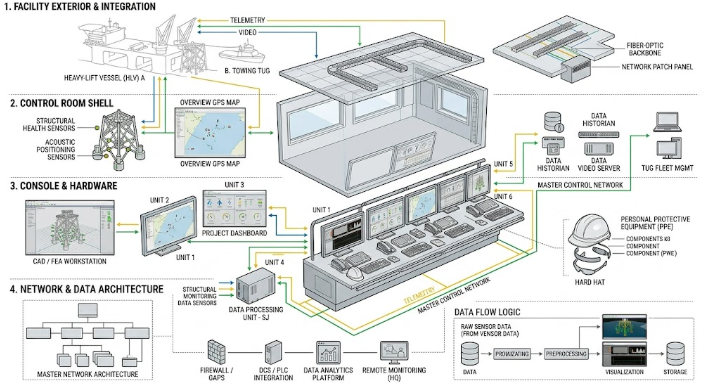
Industrial monitoring systems provide real-time visibility into vessel operations, offshore platforms, marine equipment, and critical infrastructure. Through the integration of sensors, automation technologies, communication networks, and data analytics platforms, these systems enable engineers and operators to monitor performance, detect faults, and make informed operational decisions.
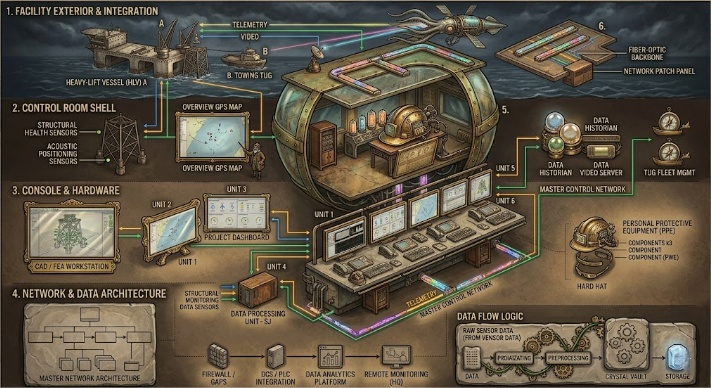
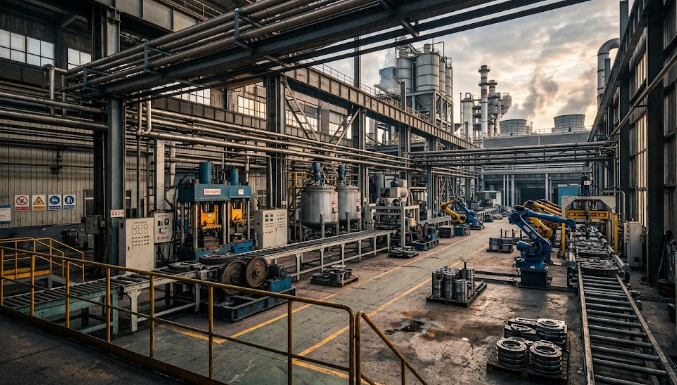
Marine environments are among the harshest operating conditions for industrial equipment. High humidity, saltwater exposure, vibration, temperature fluctuations, and extreme weather conditions can significantly impact system performance and reliability.
Industrial monitoring systems help marine operators:
Improve operational safety
Reduce equipment failures
Enhance asset utilization
Lower maintenance costs
Ensure regulatory compliance
Increase energy efficiency
Support predictive maintenance strategies
Real-time monitoring allows operators to identify issues before they escalate into costly failures or safety incidents.
Modern marine monitoring platforms consist of multiple integrated technologies working together to provide comprehensive operational visibility.
Key components include:
Sensors collect critical operational data from equipment and infrastructure, including:
Temperature
Pressure
Flow rate
Fuel consumption
Vibration
Liquid levels
Structural stress
Electrical parameters
These sensors continuously transmit data to centralized control systems for analysis.
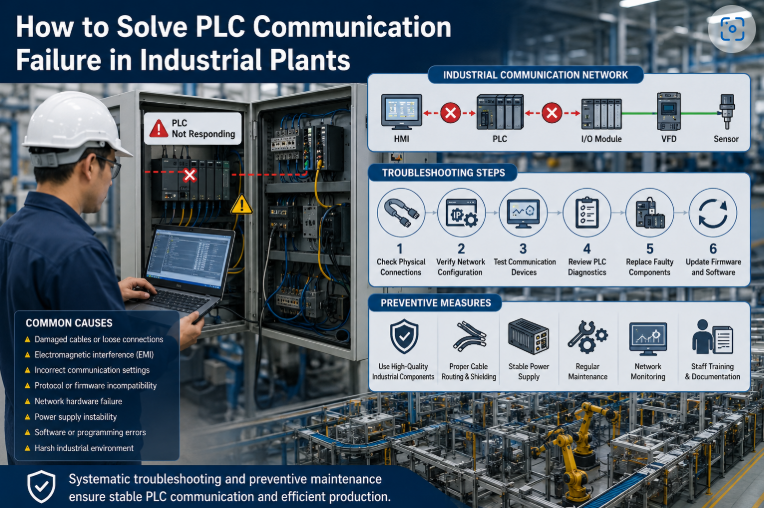
Programmable Logic Controllers (PLCs) serve as the backbone of many marine automation and monitoring solutions.
PLCs perform functions such as:
Equipment control
Alarm management
Data collection
Safety interlocking
Process automation
Industrial-grade PLC systems are designed to withstand demanding marine operating environments while maintaining reliable performance.
Supervisory Control and Data Acquisition (SCADA) systems provide centralized monitoring and control capabilities.
Operators can access real-time information through graphical dashboards displaying:
Equipment status
Alarm conditions
Process variables
Historical trends
Performance indicators
SCADA systems improve situational awareness and support rapid decision-making during critical operations.
Commercial ships, cargo vessels, and passenger ships increasingly rely on advanced monitoring technologies.
Typical monitoring applications include:
Marine engines represent one of the most critical systems onboard.
Monitoring solutions track:
Engine temperature
Lubrication pressure
Fuel efficiency
Exhaust conditions
Vibration levels
Cooling system performance
Continuous monitoring helps prevent unexpected engine failures and improves operational efficiency.
Fuel costs account for a significant portion of vessel operating expenses.
Monitoring platforms provide:
Fuel consumption analysis
Tank level monitoring
Leak detection
Efficiency optimization
Emissions tracking
Accurate fuel monitoring supports both cost reduction and environmental compliance.
Modern vessels contain complex electrical systems that require constant supervision.
Monitoring systems oversee:
Generator performance
Power distribution
Battery systems
Voltage stability
Energy consumption
Early detection of electrical abnormalities reduces the risk of power failures at sea.
Offshore oil, gas, and renewable energy facilities require highly reliable monitoring systems.
Industrial monitoring solutions support:
Sensors installed throughout offshore structures measure:
Load distribution
Structural movement
Corrosion levels
Stress accumulation
Fatigue conditions
Continuous structural assessment helps extend asset life and improve safety.
Environmental monitoring systems track:
Weather conditions
Wave height
Wind speed
Water quality
Emission levels
Real-time environmental data supports safe offshore operations and regulatory compliance.
Production processes on offshore facilities require constant supervision.
Monitoring systems oversee:
Pump performance
Pipeline pressure
Fluid flow rates
Tank levels
Processing equipment status
Automated alerts help operators respond quickly to abnormal operating conditions.
The Industrial Internet of Things (IIoT) is transforming marine monitoring capabilities.
Connected sensors and devices enable:
Remote asset monitoring
Cloud-based analytics
Real-time data sharing
Fleet-wide visibility
Automated reporting
IIoT platforms allow operators to monitor vessels and offshore assets from centralized command centers located anywhere in the world.
This connectivity significantly improves operational efficiency and management effectiveness.
Traditional maintenance strategies often rely on fixed service intervals, which may not accurately reflect equipment conditions.
Predictive maintenance solutions use monitoring data to assess equipment health in real time.
By analyzing trends and operational patterns, these systems can predict potential failures involving:
Motors
Pumps
Compressors
Generators
Bearings
Hydraulic systems
Predictive maintenance reduces downtime, minimizes repair costs, and extends equipment lifespan.
As marine monitoring systems become increasingly connected, cybersecurity has become a critical concern.
Modern industrial monitoring architectures incorporate:
Secure communication protocols
Access control systems
Network segmentation
Intrusion detection tools
Data encryption technologies
Robust cybersecurity measures help protect critical marine infrastructure from cyber threats and unauthorized access.
Marine engineering organizations implementing advanced monitoring systems can achieve significant operational advantages, including:
Improved safety performance
Increased equipment reliability
Reduced operational downtime
Lower maintenance expenditures
Better environmental compliance
Enhanced asset management
Increased operational transparency
These benefits contribute directly to improved profitability and long-term operational sustainability.
The future of marine engineering monitoring will be driven by technological innovation.
Emerging trends include:
Artificial Intelligence analytics
Digital twin technology
Autonomous vessel monitoring
Edge computing platforms
Advanced condition monitoring
Integrated fleet management systems
These technologies will further enhance decision-making capabilities and operational efficiency across the maritime sector.
Industrial monitoring systems have become indispensable for modern marine engineering projects. Through the integration of smart sensors, PLC control systems, SCADA platforms, IIoT connectivity, predictive maintenance technologies, and advanced analytics, marine operators can achieve higher levels of safety, efficiency, and reliability.
As marine infrastructure continues to evolve, advanced monitoring solutions will remain a key driver of operational excellence. Easy Semiconductor Technology (Hong Kong) Limited is committed to providing innovative industrial automation and monitoring technologies that support the success of marine engineering projects worldwide.