
 home
home
 Published: May 27, 2026 09:05 AM
 Page View: 101
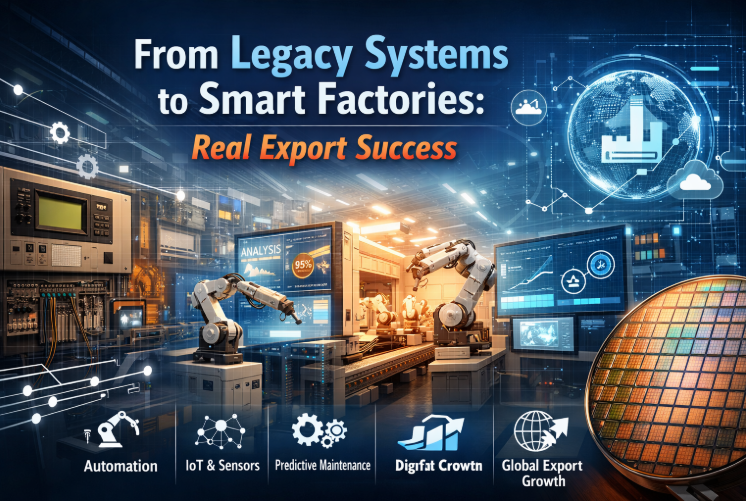
As global manufacturing enters a new digital era, industrial exporters are rapidly transforming traditional production systems into intelligent, connected smart factories. For many companies, modernization is no longer optional—it is essential for maintaining competitiveness, improving operational efficiency, and meeting international customer expectations. Across industries such as semiconductor manufacturing, industrial automation, electronics assembly, and process control, businesses are discovering that upgrading legacy infrastructure can directly drive export growth and long-term profitability.
According to industry analysts, manufacturers that invest in smart factory technologies are seeing measurable improvements in production efficiency, equipment reliability, energy management, and supply chain visibility. These advantages are becoming especially important in export-oriented industries where customers demand shorter lead times, consistent product quality, and transparent manufacturing processes.
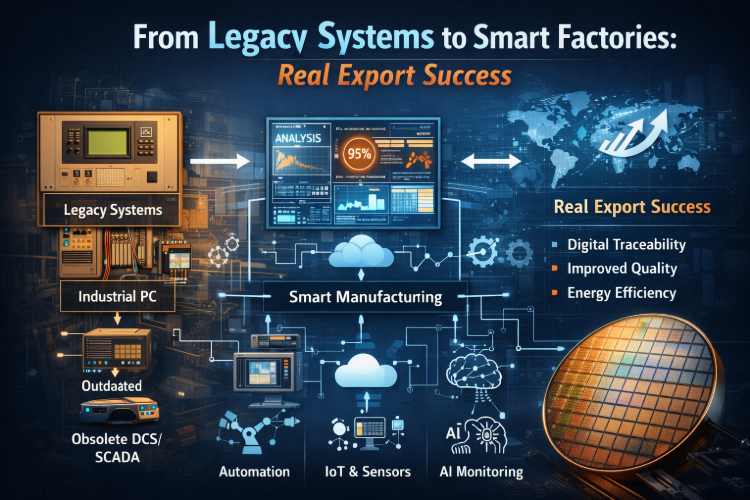
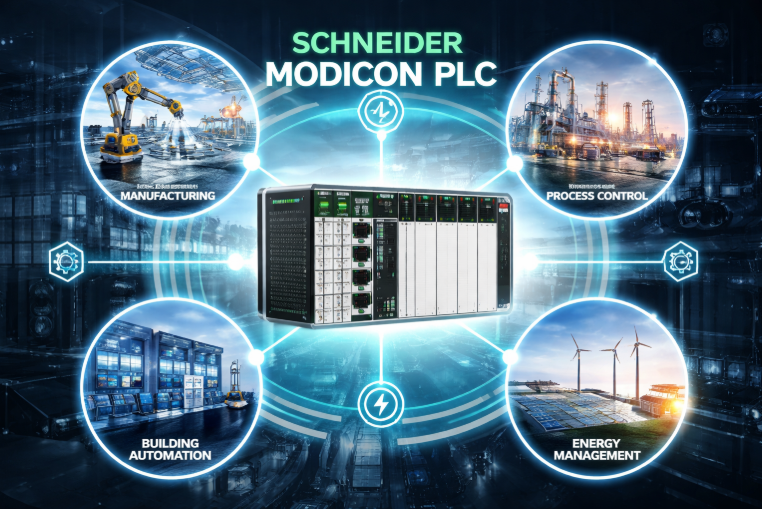
Many factories worldwide still rely on aging PLCs, DCS platforms, industrial PCs, and communication systems installed more than a decade ago. Although these systems often remain operational, they present significant limitations in modern production environments.
Legacy systems may suffer from:
Limited connectivity with modern software platforms
Higher maintenance costs
Difficulty sourcing obsolete components
Increased downtime risks
Inconsistent production data collection
Lower energy efficiency
Reduced production flexibility
For exporters serving international markets, these limitations can create serious operational bottlenecks. Global buyers increasingly require suppliers to demonstrate stable production capacity, traceability, and compliance with modern quality standards. Older infrastructure can make achieving these goals far more difficult.
However, replacing entire production systems at once is expensive and disruptive. This is why many manufacturers are choosing hybrid modernization approaches that combine existing industrial equipment with new digital technologies.
Successful smart factory transformation often begins with targeted upgrades rather than complete replacement. Industrial companies are integrating modern sensors, industrial IoT devices, cloud-based monitoring systems, and AI-driven analytics into their existing production environments.
One common strategy involves upgrading communication protocols between older PLC systems and newer factory management software. By enabling real-time data collection, manufacturers gain greater visibility into machine performance, production efficiency, and maintenance requirements.
Predictive maintenance has become one of the most valuable benefits of these upgrades. Instead of waiting for equipment failure, manufacturers can monitor vibration, temperature, cycle time, and electrical performance to identify early warning signs before costly breakdowns occur.
In semiconductor and electronics manufacturing, where even minor disruptions can create major financial losses, predictive maintenance significantly reduces downtime while improving production stability.
Another important development is the integration of energy management systems. Smart factories can optimize electricity consumption, reduce waste, and improve sustainability performance through real-time monitoring and automated process adjustments. As environmental regulations become stricter worldwide, energy-efficient production has become a competitive advantage for exporters.
Manufacturers that successfully modernize their operations are experiencing tangible export benefits. Improved production efficiency enables faster delivery schedules, while enhanced quality control reduces product defects and warranty claims.
In highly competitive global markets, buyers increasingly prefer suppliers capable of offering:
Real-time production transparency
Faster customization capabilities
Stable delivery performance
Lower operational risks
Sustainable manufacturing practices
Digital traceability systems
Factories equipped with smart manufacturing technologies can respond more quickly to changing customer requirements and market conditions. Flexible automation systems also make it easier to handle smaller production batches, customized orders, and rapid product transitions without sacrificing efficiency.
Some exporters have reported production efficiency improvements of 20% to 40% after implementing smart factory upgrades. Others have significantly reduced maintenance expenses and unplanned downtime through predictive monitoring systems.
In addition, digital manufacturing platforms improve collaboration across international supply chains. Production data can be shared more efficiently between suppliers, logistics providers, and customers, helping reduce delays and improve coordination across global operations.
The semiconductor sector remains one of the strongest drivers of smart factory adoption. Semiconductor manufacturing requires extreme precision, stable environmental control, and continuous operational reliability. As chip demand continues growing worldwide, manufacturers are under increasing pressure to expand production capacity while maintaining high quality standards.
Smart factory technologies support semiconductor manufacturers by enabling advanced process monitoring, automated defect detection, and AI-assisted production optimization. These technologies help improve yield rates while reducing material waste and operational inefficiencies.
At the same time, global semiconductor supply chains continue facing geopolitical uncertainty, fluctuating demand cycles, and component shortages. Smart manufacturing systems provide greater operational flexibility, allowing companies to adapt more quickly to changing market conditions.
Exporters capable of combining reliable industrial automation with intelligent digital infrastructure are increasingly positioned as preferred partners for international buyers.
Although automation and AI technologies are transforming factories, human expertise remains essential. Skilled engineers, maintenance specialists, and automation professionals play a critical role in designing, managing, and optimizing smart manufacturing systems.
Successful modernization projects typically involve close cooperation between equipment suppliers, system integrators, and factory operators. Training and workforce development are also becoming increasingly important as industrial environments become more digitally advanced.
Rather than replacing workers, smart factory technologies often allow employees to focus on higher-value activities such as process optimization, quality management, and strategic production planning.
As Industry 4.0 technologies continue evolving, smart factories are expected to become the global standard for industrial production. Artificial intelligence, machine learning, edge computing, digital twins, and autonomous robotics will further accelerate manufacturing transformation over the coming years.
For exporters, modernization is no longer simply about improving efficiency. It is about building resilient, scalable, and future-ready operations capable of competing in rapidly changing global markets.
Companies that continue relying entirely on outdated infrastructure may struggle to meet international customer expectations, while those investing in smart manufacturing capabilities are likely to gain stronger market positions and long-term export opportunities.
Easy Semiconductor Technology (Hong Kong) Limited believes that the transition from legacy systems to smart factories represents one of the most important industrial trends shaping the future of global manufacturing. By combining proven industrial equipment with modern digital technologies, manufacturers can achieve sustainable growth, stronger operational performance, and lasting export success in the increasingly connected global economy.