
 home
home
 Published: May 27, 2026 09:12 AM
 Page View: 111
The global semiconductor industry has entered a new era shaped by geopolitical competition, industrial policy, and rapidly evolving international trade regulations. For manufacturers and exporters of semiconductor equipment, new trade policies are no longer simply administrative barriers — they have become major factors influencing global supply chains, customer relationships, investment decisions, and long-term market strategies.
As countries continue strengthening domestic semiconductor production capabilities, governments worldwide are introducing export controls, localization incentives, tariff adjustments, and technology protection measures. These policies directly affect companies involved in semiconductor equipment manufacturing, industrial automation, electronic components, and precision engineering.
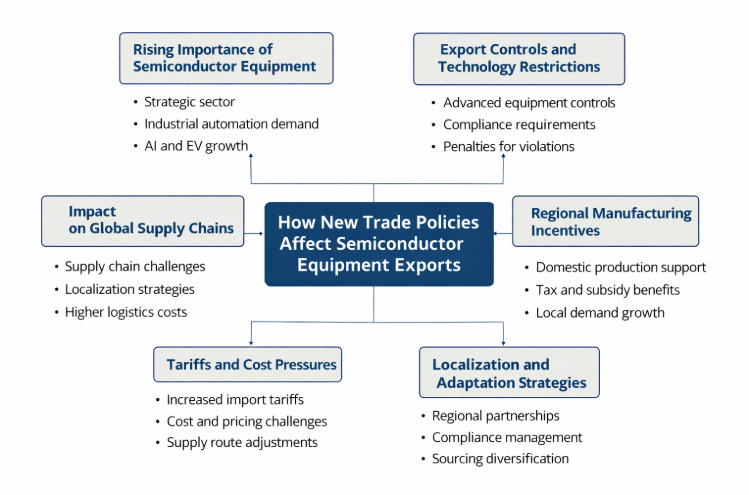
Semiconductor equipment forms the foundation of modern electronics manufacturing. Advanced production lines rely on sophisticated machinery for wafer fabrication, lithography, testing, packaging, automation, and quality control. As demand for artificial intelligence, electric vehicles, industrial automation, and consumer electronics continues growing, the semiconductor equipment market has expanded rapidly.
Governments now recognize semiconductor manufacturing as a strategic industry closely connected to national security, economic resilience, and technological leadership. As a result, trade policies targeting semiconductor technologies have become increasingly strict and complex.
These policy changes affect not only large chip manufacturers but also suppliers of industrial automation systems, PLC modules, sensors, motion controllers, robotics equipment, and related electronic components.
One of the most significant developments in recent years has been the expansion of export control regulations on advanced semiconductor technologies. Several countries have introduced restrictions on exporting high-end semiconductor manufacturing equipment, especially technologies associated with advanced chip production.
These export controls often apply to:
Lithography systems
High-performance processing equipment
Advanced inspection tools
Semiconductor testing systems
AI-related chip manufacturing technologies
Precision automation equipment
For exporters, compliance has become increasingly important. Companies must carefully verify customer locations, end-use applications, and licensing requirements before shipping products internationally.
Failure to comply with export regulations can lead to severe penalties, shipment delays, reputational damage, and supply chain disruptions. Therefore, many industrial exporters are investing heavily in compliance management systems and international legal expertise.
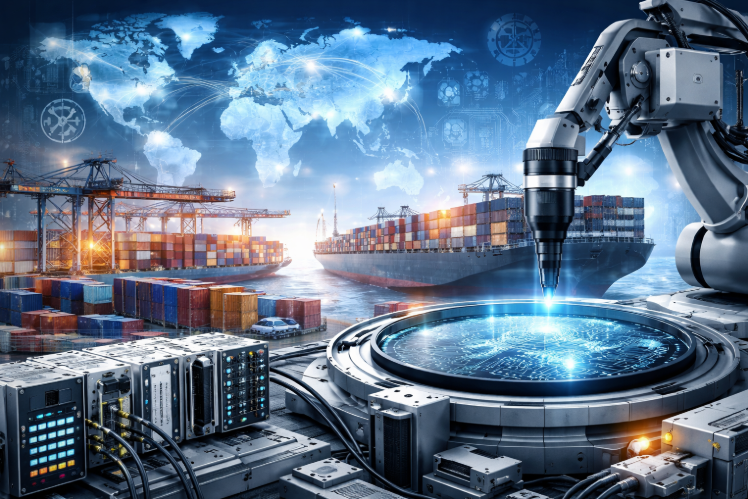
Trade policy changes are also reshaping global semiconductor supply chains. In the past, semiconductor manufacturing relied heavily on highly globalized production networks where materials, components, and equipment moved freely across multiple countries.
However, recent trade tensions and policy shifts have encouraged many manufacturers to diversify sourcing strategies and regionalize production.
As a result, semiconductor equipment suppliers now face several operational challenges:
Longer customs clearance procedures
Increased documentation requirements
Higher logistics costs
Supply chain fragmentation
Inventory management difficulties
Component sourcing uncertainty
To reduce risks, many companies are establishing multiple supplier networks across different regions. Some exporters are also increasing local warehousing capabilities to improve delivery stability for overseas customers.
For industrial automation suppliers, maintaining flexible and resilient supply chains has become a major competitive advantage.
While some trade policies create restrictions, others generate significant opportunities. Many governments are actively supporting domestic semiconductor manufacturing through large-scale investment programs and subsidy initiatives.
Countries across Asia, North America, and Europe are launching semiconductor development plans that include:
Tax incentives
Manufacturing subsidies
Infrastructure support
Research funding
Industrial park development
Equipment procurement assistance
These programs are driving strong demand for semiconductor production equipment, factory automation systems, and industrial electronic components.
As new semiconductor fabrication facilities are built worldwide, suppliers capable of providing reliable automation products and technical support can benefit from substantial export opportunities.
Companies with flexible international distribution capabilities are particularly well positioned to support rapidly expanding manufacturing projects.
Tariff adjustments remain another major factor influencing semiconductor equipment exports. Import duties on industrial machinery and electronic components can significantly increase project costs for overseas customers.
Higher tariffs often force manufacturers and buyers to reconsider sourcing decisions, negotiate pricing structures, or relocate parts of their supply chains.
For exporters, this creates pressure to optimize operational efficiency while maintaining competitive pricing. Many companies are responding by:
Improving inventory forecasting
Expanding regional distribution centers
Increasing local partnerships
Developing alternative sourcing channels
Enhancing after-sales support services
In some cases, exporters are redesigning supply routes to minimize tariff exposure and reduce delivery risks.
Another major trend influenced by trade policy is manufacturing localization. Governments increasingly encourage companies to produce critical technologies domestically to reduce dependence on foreign suppliers.
This trend has accelerated demand for local technical support, regional spare parts availability, and customized industrial solutions.
Semiconductor equipment exporters must now provide more than just products. Customers increasingly expect:
Faster regional delivery
Local engineering support
Technical integration services
Maintenance assistance
Long-term supply guarantees
Flexible customization capabilities
Companies that can establish strong regional partnerships and responsive customer service networks are more likely to succeed in this evolving environment.
Despite the challenges created by new trade policies, the long-term outlook for semiconductor equipment exports remains positive. Global semiconductor demand continues expanding across multiple industries, including:
Artificial intelligence
Renewable energy
Automotive electronics
Smart manufacturing
Medical equipment
Telecommunications
Consumer electronics
As semiconductor production capacity grows worldwide, demand for industrial automation equipment, sensors, controllers, robotics systems, and replacement electronic components will continue rising.
Exporters that prioritize flexibility, compliance, technical expertise, and supply chain resilience will be best positioned to capture new market opportunities.
For companies like Easy Semiconductor Technology (Hong Kong) Limited, adapting to evolving trade regulations while maintaining reliable global service capabilities is critical for long-term success in the semiconductor industry.
The global semiconductor industry is expected to remain heavily influenced by international trade policy for years to come. Export regulations, localization requirements, and industrial investment programs will continue shaping how semiconductor equipment moves across international markets.
While these changes introduce operational complexity, they also create opportunities for innovative exporters capable of navigating dynamic global conditions.
Companies that invest in supply chain diversification, compliance management, customer support, and international partnerships will be better prepared to compete in the next phase of global semiconductor manufacturing growth.
As technology continues advancing and governments prioritize semiconductor independence, industrial equipment suppliers will play an increasingly important role in supporting the future of global electronics production.