
 home
home
 Published: May 27, 2026 09:00 AM
 Page View: 110
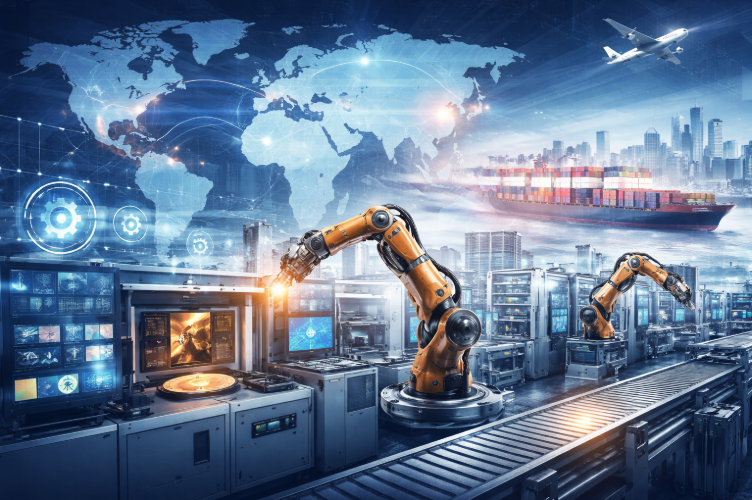
As global manufacturing enters a new era of digital transformation and industrial automation, companies worldwide are accelerating upgrades to improve efficiency, reduce operational risks, and strengthen export competitiveness. From semiconductor equipment manufacturers to industrial automation suppliers, businesses that invest in modernization are increasingly gaining advantages in international markets.
According to industry analysts, industrial upgrades are no longer optional for exporters. Rising customer expectations, stricter environmental regulations, and ongoing supply chain challenges are forcing manufacturers to adopt smarter production systems and advanced technologies. Companies that successfully modernize their operations are seeing stronger overseas demand, higher production reliability, and improved global partnerships.
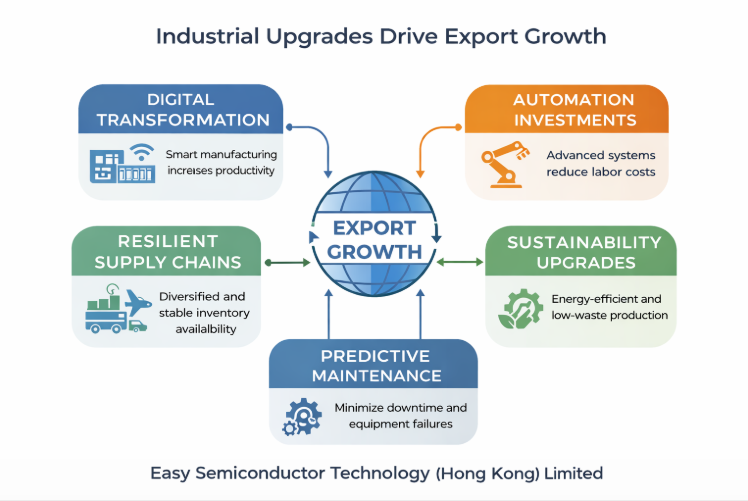
One of the most important trends shaping industrial exports is the adoption of digital manufacturing technologies. Modern factories now rely heavily on smart sensors, programmable logic controllers (PLCs), distributed control systems (DCS), and real-time monitoring software to optimize production.
Manufacturers that previously depended on manual inspection and traditional machinery are transitioning toward fully connected production environments. These smart factories provide several advantages, including:
Faster production cycles
Lower equipment downtime
Improved energy efficiency
Higher product consistency
Better inventory management
Enhanced traceability for international compliance
For exporters, these improvements directly translate into stronger competitiveness in overseas markets. International buyers increasingly prefer suppliers capable of maintaining stable production quality and fast delivery schedules.
In semiconductor manufacturing, digital upgrades are particularly important. Semiconductor production requires extremely precise environmental control and equipment coordination. Even minor operational inefficiencies can result in significant production losses. By integrating intelligent automation systems, manufacturers can reduce defects and improve operational stability.
Industrial automation has become a major driver of export expansion. Companies investing in robotics, machine vision systems, and automated inspection technologies are improving production scalability while reducing labor-related uncertainties.
Leading manufacturers are deploying automated systems across multiple production stages, including:
Material handling
Assembly processes
Quality inspection
Packaging operations
Warehouse logistics
These technologies allow factories to operate with greater consistency and flexibility. Automated production lines also help manufacturers respond more quickly to changing international market demands.
In many industries, export customers now expect suppliers to maintain advanced automation capabilities. This is especially true in sectors such as semiconductor manufacturing, automotive electronics, renewable energy equipment, and precision industrial components.
As labor costs continue rising globally, automation also provides long-term cost advantages. Companies that invest early in intelligent manufacturing infrastructure are positioning themselves for sustainable export growth over the next decade.
Recent global disruptions have highlighted the importance of supply chain resilience. Many industrial companies experienced delays caused by component shortages, transportation bottlenecks, and geopolitical uncertainty. In response, manufacturers are redesigning supply chain strategies to improve stability and reduce dependency on single sourcing regions.
Industrial upgrades now extend beyond factory equipment. Companies are investing in:
Smart inventory systems
Supplier diversification
Predictive analytics
Real-time logistics tracking
Regional distribution networks
These improvements help exporters maintain delivery reliability even during periods of market volatility.
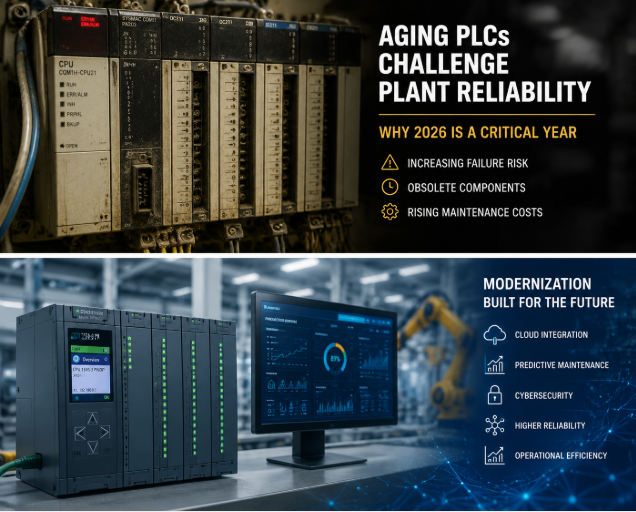
Semiconductor equipment suppliers, in particular, are increasing efforts to secure stable inventories of critical automation components, sensors, and legacy industrial modules. Many international clients continue relying on older but highly reliable control systems, creating strong demand for obsolete and hard-to-find industrial parts.
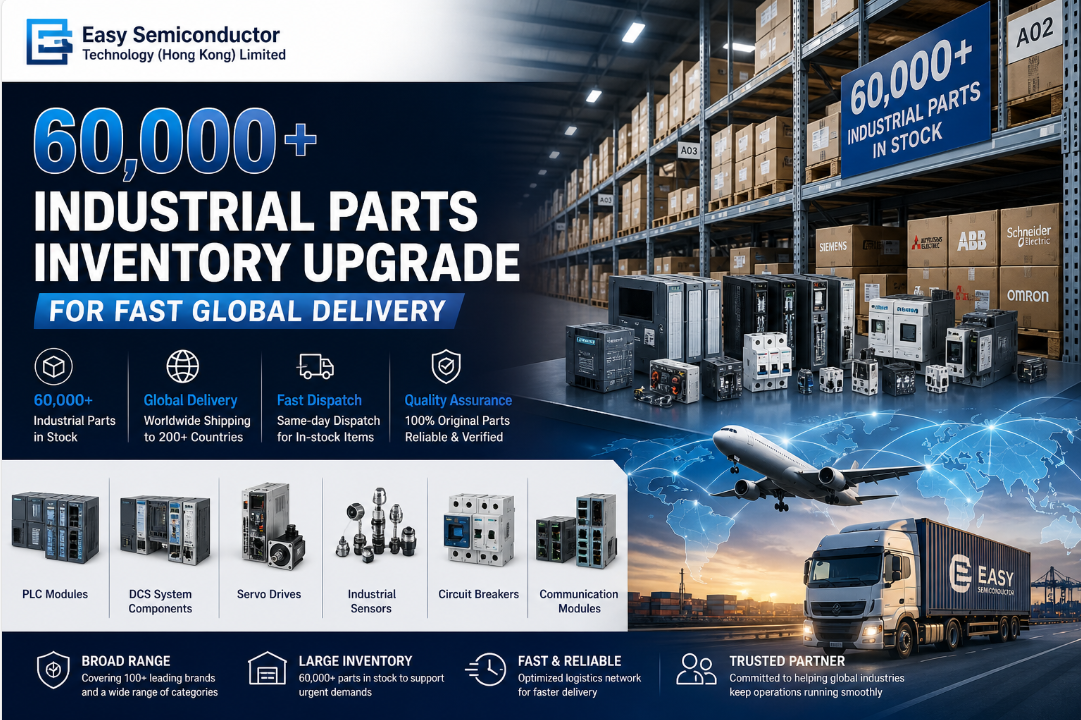
Easy Semiconductor Technology (Hong Kong) Limited continues supporting global clients by providing reliable sourcing solutions for industrial automation equipment and semiconductor-related components. Stable component availability plays a critical role in maintaining uninterrupted production for export-oriented manufacturers.
Environmental sustainability is becoming a major factor in industrial purchasing decisions. Governments and international corporations are introducing stricter environmental standards for manufacturing operations and supply chains.
As a result, companies upgrading production facilities are increasingly focusing on:
Energy-efficient automation systems
Waste reduction technologies
Low-emission manufacturing processes
Circular economy initiatives
Smart energy management solutions
Factories that reduce energy consumption and improve environmental compliance are gaining stronger access to global export opportunities.
Many international buyers now evaluate suppliers based not only on product quality and pricing but also on environmental performance. Manufacturers capable of demonstrating sustainable production practices often gain advantages during procurement evaluations.
Industrial automation technologies play a central role in sustainability efforts. Smart control systems can optimize energy consumption, reduce material waste, and improve equipment efficiency across entire production lines.
Another important industrial upgrade trend involves predictive maintenance technologies. Traditional maintenance models often rely on fixed service schedules or reactive repairs after equipment failures occur. However, predictive maintenance uses real-time monitoring and data analysis to identify problems before breakdowns happen.
Advanced monitoring systems can detect:
Temperature abnormalities
Vibration changes
Electrical irregularities
Pressure fluctuations
Performance degradation
By identifying early warning signs, manufacturers can schedule maintenance proactively and minimize costly production interruptions.
For exporters, reducing downtime is extremely important. Delayed shipments can damage customer relationships and impact long-term contracts. Predictive maintenance helps manufacturers maintain stable production schedules and improve operational reliability.
Many leading industrial companies report significant reductions in maintenance costs and unexpected shutdowns after implementing predictive maintenance systems.
The global market for industrial modernization continues expanding rapidly. Industries such as semiconductor manufacturing, renewable energy, electric vehicles, and advanced electronics are driving strong demand for automation equipment and intelligent production technologies.
Emerging markets are also increasing investments in industrial infrastructure as manufacturers seek to improve competitiveness in international trade.
At the same time, developed economies are upgrading older production systems to meet modern efficiency and sustainability standards. This combination of new industrial expansion and legacy system modernization is creating long-term growth opportunities for industrial technology suppliers.
Industry experts believe companies that continue investing in automation, digitalization, and supply chain resilience will remain better positioned for export success in the coming years.
Industrial upgrades are transforming the global manufacturing landscape. Companies that embrace automation, intelligent monitoring, predictive maintenance, and sustainable production are strengthening their positions in international markets.
As export competition intensifies, manufacturers must continue improving operational efficiency, product reliability, and supply chain flexibility. Businesses capable of adapting to evolving global requirements will be better prepared to capture new opportunities across multiple industries.
Easy Semiconductor Technology (Hong Kong) Limited remains committed to supporting industrial clients worldwide with reliable semiconductor equipment solutions, automation components, and supply chain support that help manufacturers achieve long-term export growth in an increasingly competitive global economy.