
 home
home
 Published: May 26, 2026 12:29 PM
 Page View: 108
The global semiconductor industry has become one of the most strategically important sectors in the modern economy. From smartphones and electric vehicles to industrial automation systems and artificial intelligence, semiconductor chips power nearly every advanced technology used today. Behind every semiconductor chip lies a highly sophisticated network of manufacturing equipment suppliers, automation providers, and global logistics operations. However, as geopolitical tensions and economic competition continue to intensify, international trade policies are increasingly influencing semiconductor equipment sales worldwide.
For companies involved in industrial automation and semiconductor exports, understanding the relationship between trade regulations and equipment demand is critical. Businesses such as Easy Semiconductor Technology (Hong Kong) Limited must carefully monitor policy changes to adapt to shifting market conditions, customer requirements, and supply chain risks.
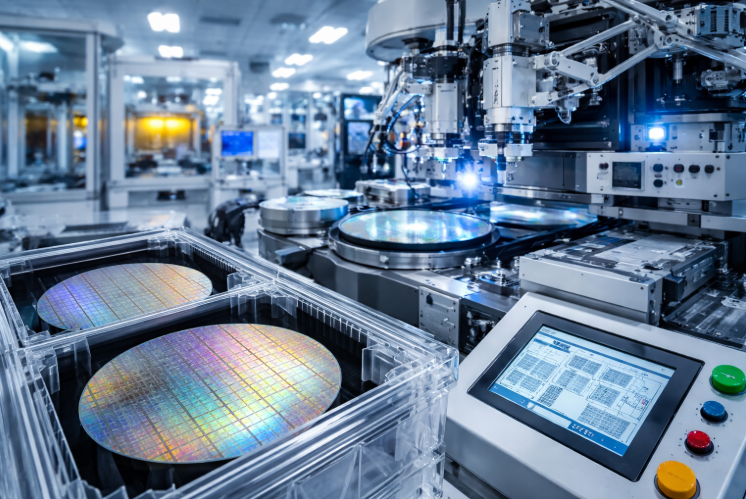
Semiconductor manufacturing requires extremely advanced and expensive machinery. Equipment such as lithography systems, wafer inspection tools, etching machines, programmable logic controllers (PLCs), and industrial automation devices are essential for modern chip production facilities.
As global demand for semiconductors continues to rise, chip manufacturers are investing billions of dollars into new fabrication plants and production upgrades. Countries including the United States, China, South Korea, Japan, Singapore, and members of the European Union are expanding semiconductor investments to strengthen domestic manufacturing capabilities and reduce dependence on foreign suppliers.
This rapid expansion creates significant opportunities for equipment suppliers. However, international trade policies can either accelerate or restrict market growth depending on how governments regulate technology exports and imports.
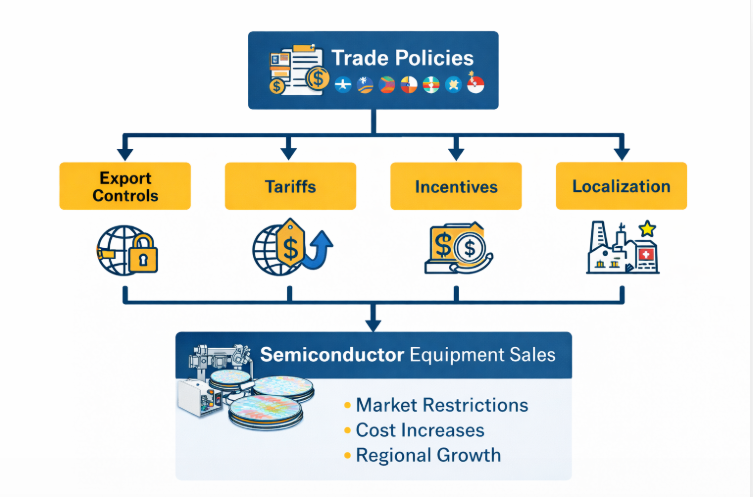
One of the most influential trade policy tools affecting semiconductor equipment sales is export control regulation. Governments often impose restrictions on advanced technologies considered strategically sensitive or related to national security.
In recent years, the United States has implemented stricter export controls on advanced semiconductor manufacturing equipment destined for certain Chinese technology companies and fabrication facilities. These restrictions affect highly advanced chip production technologies, including extreme ultraviolet (EUV) lithography systems, advanced AI chip manufacturing tools, and specific semiconductor process equipment.
As a result, equipment suppliers around the world must navigate increasingly complex compliance requirements. Manufacturers may need government licenses before exporting certain products, while distributors must ensure that customers meet regulatory standards.
These policies directly impact global sales patterns. Some suppliers experience reduced access to restricted markets, while others benefit from increased demand in regions seeking alternative supply chain partners.
Trade tensions have encouraged many semiconductor companies to diversify manufacturing locations. Rather than relying heavily on a single country or region, manufacturers are now building multiple production facilities across different markets.
This shift has accelerated semiconductor investments in Southeast Asia, India, and parts of Europe. Countries such as Singapore, Vietnam, and Malaysia are becoming increasingly attractive due to stable business environments, skilled labor availability, and strategic geographic positioning.
For semiconductor equipment suppliers, this regional diversification creates new export opportunities. Industrial automation systems, legacy PLC modules, sensors, power supplies, and factory control equipment are in growing demand as new fabrication facilities are established worldwide.
Companies that can provide flexible global logistics support and fast equipment sourcing gain a competitive advantage in this evolving environment.
Tariffs remain another major factor influencing semiconductor equipment sales. Import duties on industrial components and manufacturing machinery can significantly increase operational costs for semiconductor producers.
When governments impose tariffs on electronic equipment, manufacturers may face higher expenses for critical production tools and replacement parts. These increased costs can delay factory upgrades, reduce purchasing volumes, or encourage companies to seek lower-cost suppliers from alternative markets.
For example, trade disputes between major economies have previously resulted in tariffs affecting industrial electronics, automation devices, and semiconductor-related products. Such policies not only increase direct costs but also create uncertainty in long-term procurement planning.
As a result, buyers increasingly prioritize suppliers capable of offering cost-effective sourcing solutions, inventory flexibility, and stable international shipping channels.
While restrictive trade policies can create challenges, government incentive programs are also generating strong demand for semiconductor equipment.
Many countries now view semiconductor manufacturing as a strategic national priority. To strengthen domestic production capabilities, governments are introducing subsidy programs, tax incentives, and infrastructure investments designed to attract semiconductor manufacturers.
The United States introduced major semiconductor investment initiatives through the CHIPS and Science Act, while Europe launched similar programs to expand regional semiconductor capacity. Asian countries are also increasing financial support for domestic chip manufacturing projects.
These initiatives are driving large-scale construction of new fabrication plants and modernization projects, creating substantial demand for semiconductor production equipment, industrial control systems, and automation technologies.
Suppliers that align with these investment trends can benefit from long-term growth opportunities across multiple regions.
Another important impact of trade policies is the growing emphasis on localization. Semiconductor manufacturers are increasingly seeking local or regional suppliers to reduce geopolitical risks and improve supply chain resilience.
This trend affects purchasing decisions across the industrial automation sector. Buyers now value suppliers that maintain regional inventories, provide fast delivery, and offer strong after-sales support within local markets.
For equipment distributors and exporters, maintaining diversified supplier networks and strategic inventory management has become essential. Companies capable of delivering both current-generation and obsolete industrial components can help manufacturers avoid costly downtime and maintain production continuity.
Localization strategies also encourage partnerships between international suppliers and regional distributors, helping businesses expand market reach while complying with local trade regulations.
The semiconductor industry is no longer driven solely by commercial demand. It has become deeply connected to global technological leadership, artificial intelligence development, defense systems, and national economic competitiveness.
As governments continue competing for semiconductor leadership, trade policies will likely remain a major influence on equipment sales. Companies operating in this industry must stay informed about evolving regulations, export compliance requirements, and regional investment trends.
Despite ongoing uncertainties, long-term demand for semiconductor equipment remains strong. Emerging technologies such as AI computing, electric vehicles, 5G infrastructure, industrial robotics, and smart manufacturing continue driving semiconductor consumption worldwide.
This sustained growth creates opportunities for agile suppliers capable of adapting to changing trade environments while maintaining reliable customer support and efficient global logistics operations.
Trade policies are reshaping the global semiconductor equipment market in significant ways. Export controls, tariffs, government incentives, and localization strategies all influence how manufacturers purchase industrial equipment and manage supply chains.
For companies like Easy Semiconductor Technology (Hong Kong) Limited, understanding these global trends is essential for maintaining competitiveness in the evolving semiconductor industry. Businesses that remain flexible, compliance-focused, and responsive to international market changes will be better positioned to succeed as semiconductor manufacturing continues expanding worldwide.
As the semiconductor sector grows increasingly strategic, trade policy will continue playing a central role in shaping the future of equipment sales, industrial automation, and global technology development.