
 home
home
 Published: May 22, 2026 07:46 AM
 Page View: 108
In recent years, the Industrial Internet of Things (IIoT) has emerged as a transformative force in the manufacturing and industrial equipment sectors. By seamlessly connecting machines, sensors, and enterprise systems, IoT is not only improving operational efficiency but also reshaping global trade patterns in industrial equipment exports. Companies like Easy Semiconductor Technology (Hong Kong) Limited are at the forefront, leveraging IoT innovations to enhance competitiveness in international markets.
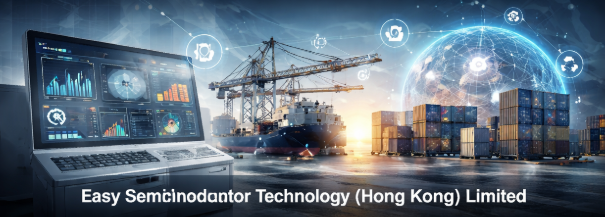
IoT Integration Driving Equipment Innovation
The integration of IoT into industrial machinery has enabled manufacturers to offer smarter, more connected products. Sensors embedded in equipment provide real-time data on performance, predictive maintenance, and energy consumption. This connectivity allows manufacturers to offer value-added services, such as remote diagnostics and automated reporting, which are increasingly demanded by international buyers.
For export markets, this represents a paradigm shift. Traditional industrial equipment relied heavily on physical presence for installation, maintenance, and troubleshooting. IoT-enabled machinery reduces the need for on-site intervention, making it easier and faster to serve customers globally. This efficiency translates into shorter lead times, lower operational costs, and enhanced customer satisfaction—factors that significantly influence purchasing decisions in competitive export markets.
Boosting Predictive Maintenance and Reliability
One of the most significant benefits of IoT integration is predictive maintenance. By continuously monitoring equipment conditions, manufacturers can predict potential failures before they occur. This capability ensures higher reliability and longer lifespans for exported industrial machinery.
International buyers, particularly in regions with limited technical support, are increasingly prioritizing reliability and minimal downtime. IoT-equipped equipment allows exporters to address these concerns proactively. Companies like Easy Semiconductor Technology leverage cloud-based analytics and AI-driven monitoring systems to deliver machines that not only perform efficiently but also provide detailed operational insights to overseas clients.
Enhancing Supply Chain Transparency
IoT is also revolutionizing supply chain management in industrial equipment exports. Smart tracking and monitoring solutions allow manufacturers to oversee the entire logistics process in real-time, from production to delivery. Exporters can provide clients with accurate shipment updates, anticipate delays, and optimize inventory management.
This transparency builds trust in international markets, particularly in regions where import regulations are stringent and logistics networks are complex. For instance, IoT-enabled tracking systems can provide proof of origin, ensure compliance with customs regulations, and reduce risks associated with damaged or delayed shipments. These capabilities strengthen a company's reputation as a reliable global supplier.
Enabling Data-Driven Global Market Strategies
IoT data is invaluable for shaping export strategies. By analyzing operational data, manufacturers can identify usage patterns, performance bottlenecks, and regional equipment preferences. This information allows companies to tailor their products to the specific needs of international clients, ensuring better market fit and competitive advantage.
Easy Semiconductor Technology, for example, uses IoT data to adjust product offerings and improve service models based on insights from different markets. This data-driven approach enables the company to anticipate demand trends, optimize production schedules, and enhance customer satisfaction—key factors in expanding global export footprint.
Challenges and the Road Ahead
While IoT presents significant opportunities, integrating connected technologies into industrial equipment is not without challenges. Cybersecurity, data privacy, and interoperability remain critical concerns for exporters. Companies must invest in secure platforms, standardized protocols, and training to ensure that IoT-enabled equipment is reliable, safe, and compliant with international regulations.
Despite these hurdles, the trajectory of IoT adoption in industrial equipment exports is clear. Manufacturers that embrace connected technologies are positioning themselves for success in a global market that increasingly values efficiency, reliability, and transparency. IoT is no longer just a technological upgrade—it is a strategic differentiator in industrial trade.
Conclusion
The Industrial Internet of Things is fundamentally reshaping how industrial equipment is designed, produced, and exported. By enabling predictive maintenance, real-time monitoring, supply chain transparency, and data-driven insights, IoT is driving a new era of global competitiveness. For exporters like Easy Semiconductor Technology (Hong Kong) Limited, embracing IoT innovations is not just an option—it is essential for thriving in the fast-evolving international industrial market.