
 home
home
 Published: May 14, 2026 01:26 PM
 Page View: 107
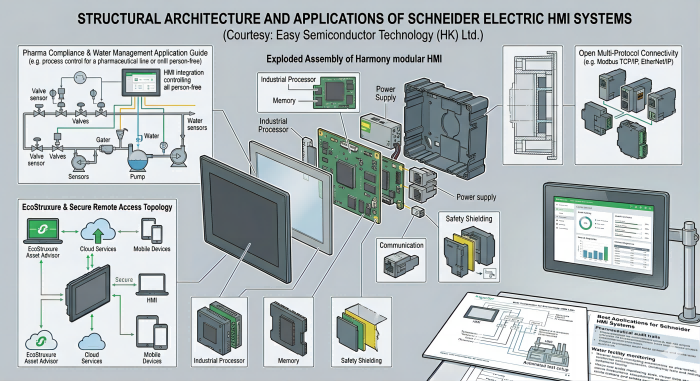
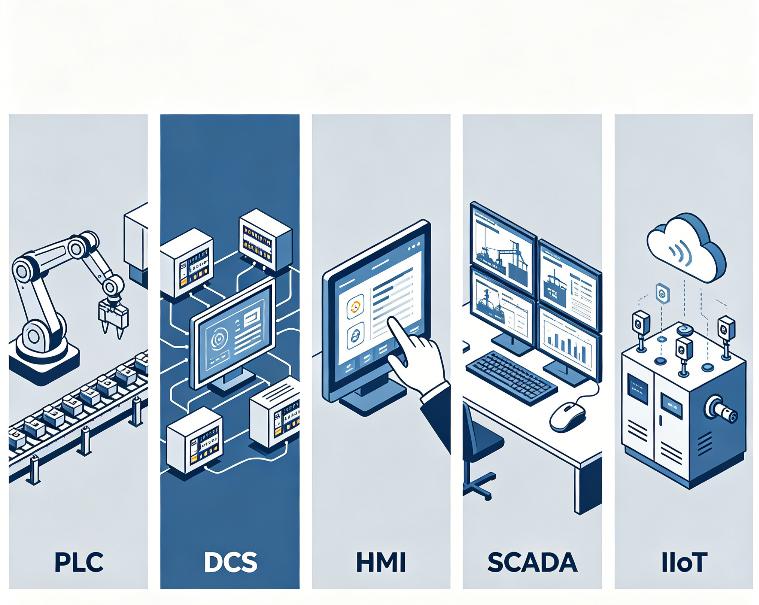
In today’s fast-developing industrial automation environment, Human Machine Interface (HMI) systems play a critical role in improving operational visibility, production efficiency, and equipment control. Among the leading solutions in the market, Schneider Electric HMI systems are widely recognized for their reliability, user-friendly design, and seamless integration with PLC, SCADA, and DCS platforms.
From manufacturing plants to water treatment facilities, Schneider HMI systems provide operators with real-time monitoring, alarm management, process visualization, and data analysis capabilities. Their flexibility makes them suitable for a wide range of industrial applications. This article explores the best applications for Schneider HMI systems and how they help industries improve automation performance.
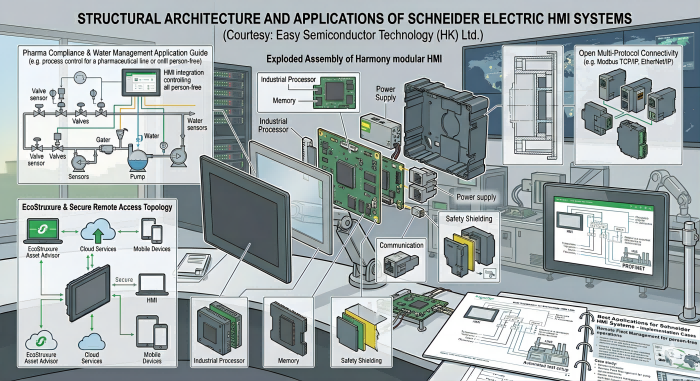
One of the most common applications for Schneider HMI systems is in manufacturing production lines. Industries such as automotive, electronics, food processing, and packaging require continuous monitoring of machines, conveyors, robotic systems, and assembly stations.
Schneider HMI panels allow operators to view machine status, adjust production parameters, monitor output rates, and respond quickly to alarms. Real-time visualization helps reduce downtime and improves overall production efficiency.
For example, in a packaging line, operators can use HMI screens to control filling speeds, conveyor timing, labeling systems, and rejection processes, ensuring consistent product quality and minimal production interruptions.
Water treatment systems require precise monitoring of pumps, valves, pressure levels, chemical dosing, and filtration processes. Schneider HMI solutions are highly effective in managing these complex operations.
Operators can use the interface to track water flow, tank levels, pH values, and pump performance in real time. Alarm notifications help prevent overflow, pump failure, or contamination risks.
In wastewater treatment plants, HMI systems improve environmental compliance by providing clear process records and historical trend analysis, helping engineers maintain stable and safe operations.
The oil and gas sector demands highly reliable automation systems due to harsh operating environments and strict safety requirements. Schneider HMI systems are widely used in refineries, offshore platforms, pipeline stations, and gas processing plants.
They provide centralized control for pressure monitoring, flow regulation, temperature management, and emergency shutdown systems. Integration with PLC and safety instrumented systems enhances plant safety and operational control.
Remote monitoring capability is especially valuable for pipeline stations and unmanned facilities, where fast operator response is essential.
Power plants and energy distribution systems rely heavily on real-time data visualization and fault response. Schneider HMI systems help operators monitor turbines, generators, transformers, switchgear, and load distribution systems.
In renewable energy applications such as solar and wind farms, HMI panels provide clear dashboards for energy output, inverter status, battery storage systems, and fault diagnostics.
This improves maintenance planning and supports stable power supply management across the facility.
Modern commercial buildings and industrial facilities require intelligent control of HVAC systems, lighting, fire protection, and access management. Schneider HMI systems are widely applied in building automation systems to improve energy efficiency and operational comfort.
Facility managers can monitor air conditioning performance, temperature zones, power consumption, and security alarms from a single interface. This centralized management reduces operating costs and improves building reliability.
Smart buildings increasingly depend on HMI-driven automation to achieve sustainability goals and optimize energy usage.
Industries with strict hygiene and compliance requirements, such as pharmaceuticals and food production, benefit greatly from Schneider HMI solutions.
Operators need accurate batch control, recipe management, temperature monitoring, and equipment cleaning validation. Schneider HMI systems support clear process documentation and help meet regulatory standards such as GMP and FDA compliance.
Touchscreen interfaces also reduce operator error and improve process consistency in highly controlled production environments.
Schneider Electric HMI systems are known for their strong compatibility with Modicon PLCs and other industrial control platforms. Their intuitive graphics, robust hardware, flexible communication protocols, and reliable performance make them ideal for both small standalone machines and large-scale industrial plants.
Features such as remote access, alarm history, data logging, and customizable dashboards provide significant advantages for maintenance teams and production managers.
Easy Semiconductor Technology (Hong Kong) Limited supplies original Schneider HMI products, replacement parts, and technical support services to help customers maintain stable automation operations across multiple industries.
The best applications for Schneider Electric HMI systems cover nearly every major industrial sector, from manufacturing and water treatment to energy management and pharmaceuticals. Their ability to improve visibility, simplify control, and enhance operational efficiency makes them an essential part of modern industrial automation.
With proper system design, regular maintenance, and expert support, Schneider HMI solutions can significantly improve plant performance, reduce downtime, and support long-term production reliability.