
 home
home
 Published: May 18, 2026 09:58 AM
 Page View: 102
In 2026, industrial plants around the world are increasingly facing operational challenges linked to legacy programmable logic controllers (PLCs). These older automation systems, once the backbone of manufacturing and process control, are now struggling to meet the demands of modern industrial operations. Experts attribute the rising frequency of failures to a combination of technological obsolescence, supply chain limitations, and evolving operational requirements.

Technological Obsolescence
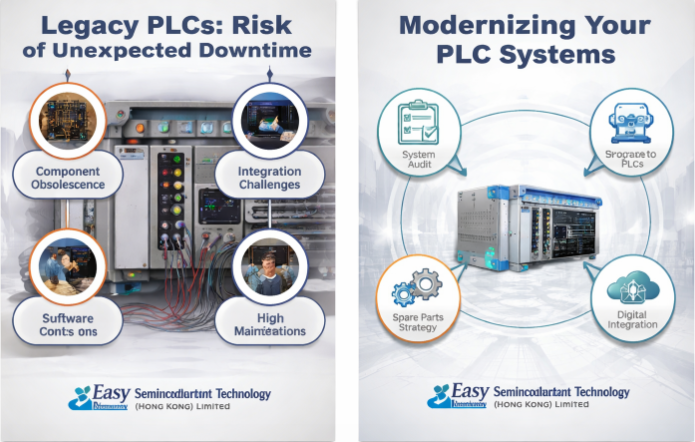
Legacy PLCs were designed decades ago, often with proprietary hardware and software that no longer align with current industrial standards. While these systems were highly reliable in their prime, many now suffer from outdated microprocessors, limited memory, and slower processing speeds. As modern manufacturing increasingly relies on real-time data, machine learning, and predictive analytics, these older systems are unable to keep pace. The result is frequent system lags, unplanned stops, and increased risk of production errors.
In addition, programming environments for legacy PLCs are often outdated, with many relying on languages or development tools that are no longer supported. Finding engineers skilled in these legacy systems has become increasingly difficult, creating a talent bottleneck that exacerbates the risk of errors during maintenance or upgrades.
Supply Chain Challenges
Another critical factor contributing to PLC failures in 2026 is the scarcity of replacement parts. Many legacy PLC components are no longer manufactured, leaving plants dependent on secondary markets or refurbished parts. Supply chain disruptions, rising component costs, and counterfeit risks have made sourcing obsolete PLC modules a significant challenge. Companies are increasingly turning to global sourcing specialists, such as Easy Semiconductor Technology, to secure authentic parts and prevent prolonged downtime.
Moreover, the push towards digitalization and Industry 4.0 standards has highlighted the limitations of legacy systems. Modern factories demand PLCs that can seamlessly integrate with cloud-based platforms, IIoT sensors, and advanced control software. Legacy systems, in contrast, often rely on older communication protocols, making integration costly and complex.
Aging Hardware and Environmental Stress
Physical wear and tear on hardware is another factor. Many legacy PLCs have been operating continuously for decades, often in harsh industrial environments with fluctuating temperatures, humidity, or electrical noise. Capacitors degrade, connectors corrode, and circuit boards become brittle over time, all contributing to intermittent failures and sudden breakdowns. Regular maintenance can mitigate some of these issues, but it cannot fully counteract decades of operational stress.
Cybersecurity Vulnerabilities
As industrial plants adopt more connected technologies, cybersecurity has become a critical concern. Legacy PLCs typically lack modern security features, such as encryption, secure remote access, or real-time threat detection. In 2026, attacks targeting vulnerable industrial control systems are on the rise, making legacy PLCs a potential weak point for ransomware or malware incidents. Plants relying on these systems are increasingly exposed to operational disruptions, financial losses, and regulatory scrutiny.
Cost Implications of Legacy Failures
The financial consequences of PLC failures are significant. Unplanned downtime can halt production lines, disrupt supply chains, and lead to costly repairs or emergency sourcing of parts. Moreover, the longer a plant relies on obsolete PLCs, the higher the cumulative maintenance and operational costs become. Industrial leaders are now realizing that continuing to operate aging systems is often more expensive than strategic upgrades or system replacements.
Proactive Measures for 2026 and Beyond
To address these challenges, industry experts recommend a proactive approach. First, conducting a comprehensive audit of all legacy PLCs in operation can identify high-risk systems before failures occur. Second, partnering with specialized sourcing and maintenance providers ensures access to authentic spare parts and technical expertise. Third, gradual modernization of control systems, including migration to hybrid PLC-DCS architectures or fully modern PLC platforms, can enhance reliability and future-proof operations.
Easy Semiconductor Technology (Hong Kong) Limited has noted a surge in inquiries from industrial clients seeking solutions for aging PLC systems. Their global sourcing capabilities, combined with in-depth knowledge of both legacy and modern automation platforms, allow plants to minimize downtime while transitioning toward Industry 4.0-ready solutions.
Conclusion
The failure of legacy PLC systems in 2026 is no longer an isolated concern; it is a systemic challenge affecting industrial productivity worldwide. Obsolescence, supply chain constraints, hardware degradation, cybersecurity vulnerabilities, and operational demands all contribute to escalating failure risks. By acknowledging these risks and adopting proactive strategies, industrial plants can safeguard operations, optimize performance, and ensure a smoother transition into the digital era.
Legacy PLCs may have served factories faithfully for decades, but in 2026, the cost of inaction is higher than ever. Modernization, strategic sourcing, and preventive maintenance are no longer optional—they are essential for operational resilience in a rapidly evolving industrial landscape.