
 home
home
 Published: May 09, 2026 01:00 PM
 Page View: 103
Industrial controllers, including PLCs, DCS, and SCADA systems, are the backbone of modern industrial automation, underpinning stable operations across oil and gas, manufacturing, chemical processing, power generation, and many other critical sectors. As the "brain" of automation systems, they manage signal processing, logic execution, equipment coordination, and data transmission, directly determining production efficiency, safety, and continuity. However, industrial controllers frequently face failure risks due to harsh operating environments, improper use, and inadequate maintenance. According to industry statistics, unplanned controller failures cause an average of 8-12 hours of downtime per incident, resulting in huge economic losses for enterprises. Easy Semiconductor Technology (Hong Kong) Limited, a professional provider of industrial automation components and solutions, summarizes the top reasons for industrial controller failure based on years of on-site experience and technical research, helping enterprises identify potential risks in advance and reduce failure rates.
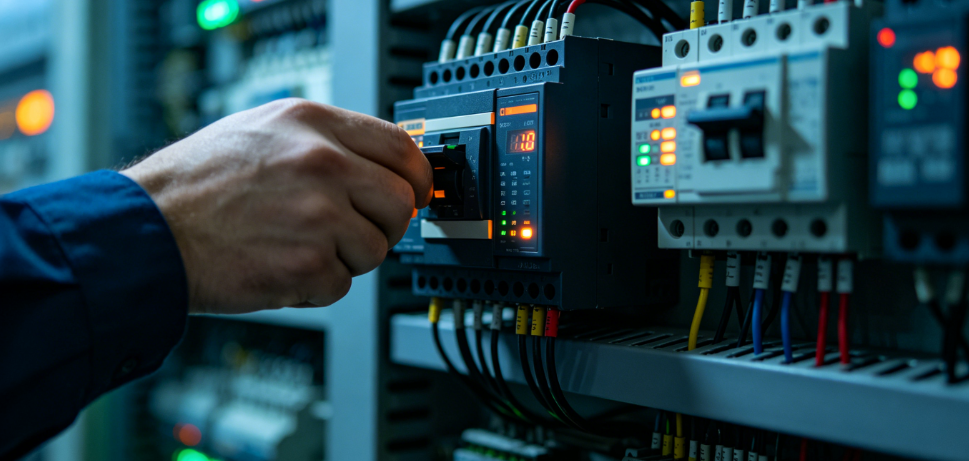
The first and most common reason for industrial controller failure is harsh environmental conditions, which account for approximately 35% of all failures. Industrial sites often feature extreme temperatures, high humidity, heavy dust, and strong electromagnetic interference—factors that severely damage controller components. High temperatures accelerate the aging of electronic components such as electrolytic capacitors and MOSFETs; according to the Arrhenius model, the failure rate of semiconductor devices doubles for every 10℃ increase in junction temperature. In high-humidity environments like coastal areas or underground pumping stations, condensation can cause corrosion, reduced insulation resistance, and short circuits in controller circuits. Dust accumulation on heat sinks and internal components blocks heat dissipation and disrupts signal transmission, while electromagnetic interference from nearby high-power equipment (such as welding machines and inverters) can cause program malfunctions or data loss.
Power supply instability is another key factor leading to controller failure, contributing to about 25% of incidents. Industrial power grids often suffer from voltage fluctuations, surges, sags, and even sudden power outages, which directly impact the normal operation of controllers. Voltage surges can burn out power modules and internal circuits, while persistent undervoltage causes the controller to malfunction or restart unexpectedly. Poorly grounded power supplies or mismatched voltage levels (e.g., confusing AC220V with DC24V) can also damage the controller’s power system. Additionally, failed backup batteries—with a typical service life of 1-3 years—often lead to program loss and clock failure when power is cut off. Easy Semiconductor notes that many enterprises overlook power supply protection, increasing the risk of controller failure.
Component aging and poor quality are major long-term causes of controller failure. Industrial controllers operate continuously under high loads for years, and key components such as capacitors, resistors, and integrated circuits gradually degrade over time. For example, aging capacitors lose capacitance, leading to unstable power supply and signal distortion, while worn connectors cause poor contact and intermittent failures. Furthermore, the use of low-quality or incompatible replacement components—such as counterfeit modules or mismatched firmware versions—significantly shortens the controller’s service life and increases failure risks. Many enterprises choose cheap, substandard components to cut costs, only to face more frequent failures and higher maintenance expenses in the long run.
Improper installation and layout also contribute to controller failure. Many maintenance personnel ignore installation standards, placing controllers in direct sunlight, near high-temperature equipment (such as boilers and heaters), or in poorly ventilated corners.不合理的 cabinet layout—such as overcrowding components or insufficient spacing between devices—blocks air circulation and reduces heat dissipation efficiency. Loose wiring terminals or incorrect wiring (e.g., reversed NPN/PNP sensor connections) can cause short circuits, signal loss, or component burnout. In addition, inadequate grounding during installation fails to shield electromagnetic interference, making the controller vulnerable to external noise.
Lack of regular maintenance and improper operation are avoidable yet common causes of failure. According to industry surveys, over 40% of enterprises do not have a standardized maintenance plan for industrial controllers. Without regular cleaning, inspection, and calibration, dust accumulates, components degrade unnoticed, and potential faults remain unaddressed until a major failure occurs. Improper operation—such as frequent program modifications, overloading the controller beyond its rated capacity, or incorrect parameter settings—also leads to malfunctions. For example, long-term overloading causes excessive heat generation, while program errors (such as logic conflicts or dead loops) can cause the controller to freeze or execute incorrect commands.
Software issues and cyber threats have become increasingly prominent causes of controller failure in the digital age. Outdated firmware or control programs may contain bugs that cause system crashes, while unauthorized program modifications or accidental deletions lead to logic errors. With the integration of industrial Internet of Things (IIoT), controllers are more connected to networks, making them vulnerable to cyberattacks such as malware and ransomware. These attacks can disrupt controller operations, steal sensitive data, or even cause irreversible damage to hardware components.
Understanding the top reasons for industrial controller failure is the first step toward preventing unplanned downtime. Easy Semiconductor Technology (Hong Kong) Limited provides comprehensive solutions to address these risks, including high-quality, durable industrial controller components, professional installation guidance, regular maintenance services, and intelligent monitoring systems. The company’s technical team helps enterprises formulate personalized maintenance plans, select compatible components, and optimize controller installation and operation, effectively reducing failure rates and extending equipment service life.
A senior maintenance engineer from a leading oil and gas enterprise commented: "With the professional guidance from Easy Semiconductor, we have identified and addressed potential risks of controller failure in advance, reducing unplanned downtime by 50% and cutting maintenance costs significantly."
As industrial automation becomes more intelligent and complex, the stability of industrial controllers is more critical than ever. Easy Semiconductor remains committed to innovating and optimizing its products and services, helping enterprises mitigate controller failure risks, ensure continuous production, and achieve efficient, safe, and cost-effective operations. By addressing environmental, power supply, component, installation, maintenance, and software-related issues, enterprises can significantly improve the reliability and service life of their industrial controllers.