
 home
home
 Published: May 08, 2026 01:13 PM
 Page View: 138
Industrial automation systems are complex integrated systems composed of power supplies, PLCs, I/O modules, SCADA systems, industrial Ethernet, and other core components. For engineers, rapid and accurate troubleshooting of system faults is not only a core professional capability but also the key to minimizing unplanned downtime and ensuring stable production. In industrial scenarios, faults such as power supply abnormalities, communication interruptions, module failures, and program errors occur frequently, bringing great challenges to engineers. As a professional supplier of industrial control semiconductors and spare parts, Easy Semiconductor Technology (Hong Kong) Limited integrates years of on-site technical experience and industry insights to compile a practical troubleshooting guide for engineers, covering common faults, diagnosis methods, and solutions, helping engineers improve troubleshooting efficiency and solve problems systematically.
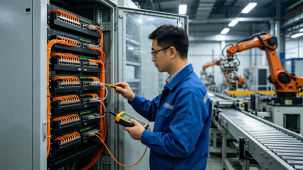
The core principle of industrial automation troubleshooting is "from simple to complex, from local to overall, from physical layer to application layer". Engineers should first clarify the fault phenomenon, collect relevant information (such as fault time, environmental conditions, and recent operation records), and then conduct targeted diagnosis, avoiding blind disassembly and operation that may cause secondary damage to equipment. This guide focuses on the most common faults in industrial automation systems and provides step-by-step operation methods for engineers.
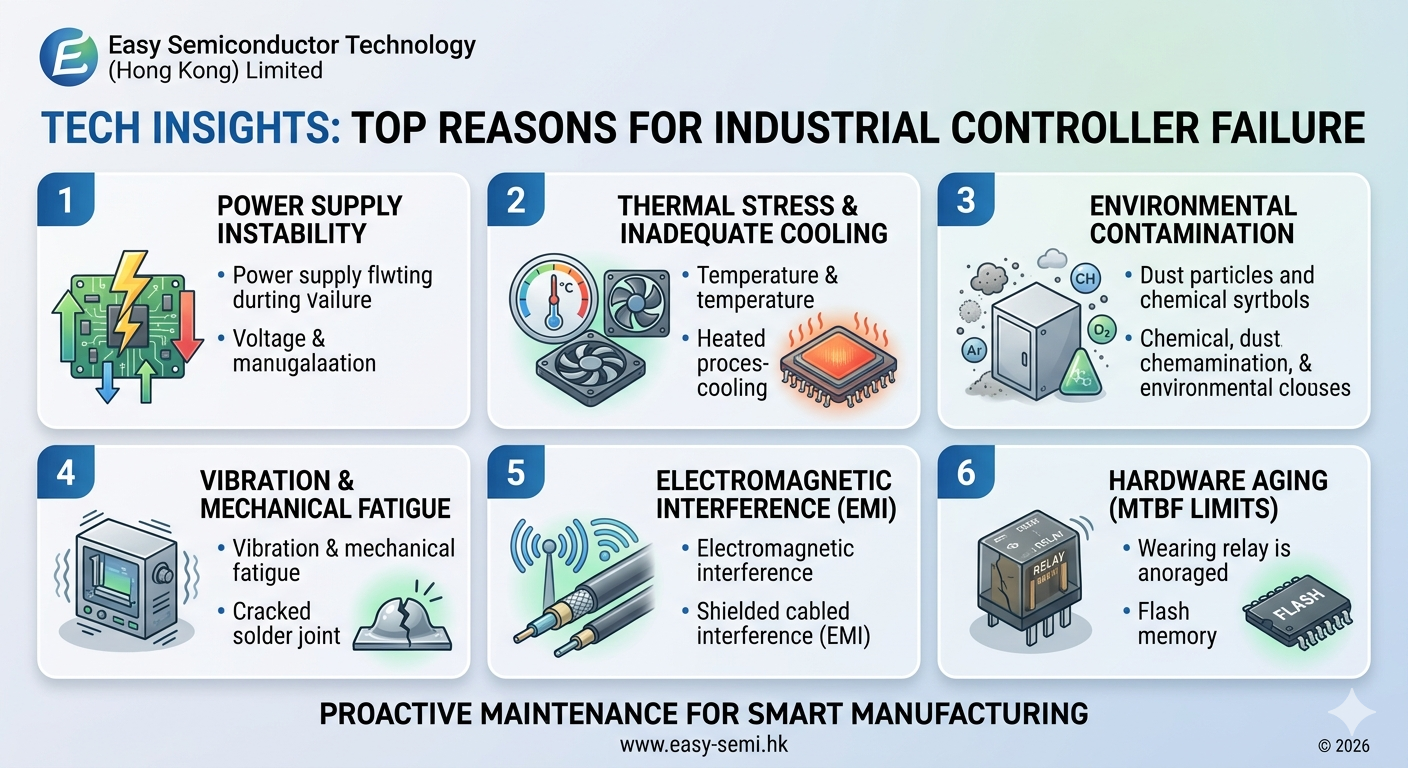
Power supply failure is one of the most common and critical faults in automation systems, as the power supply is the "heart" of the entire system. Common power supply faults include voltage surges, undervoltage, power module burnout, wiring loose, and backup power (UPS) failure. For engineers, the first step is to ensure operational safety: cut off the main power supply, disconnect the faulty equipment, and avoid electric shock or short circuit. Then, conduct visual inspection: check for damaged cables, loose terminals, abnormal heat or burns on power modules, and bulging or leakage of backup batteries. Use a multimeter to test input and output voltage, locate fault points such as voltage abnormalities or module burnout, and implement targeted fixes—install surge protectors for voltage surges, replace aging power modules or batteries, and re-fasten loose connections. Easy Semiconductor provides high-quality industrial-grade power supply spare parts, ensuring compatibility and stability after replacement.
PLC and I/O module faults are another key type that engineers often encounter, affecting signal transmission and control command execution. Common faults include PLC program loss, I/O module signal failure, and module indicator abnormalities. For PLC faults, engineers should first check the power supply and communication connection of the PLC host, then use programming software to connect to the PLC, check the program integrity and I/O point status, and restore the program from backup if there is program loss. For I/O module faults, follow the "visual inspection → signal testing → substitution test" steps: observe indicator lights, use a signal generator or multimeter to test input/output signals, and replace the module with a known good one to confirm faults. This method can quickly determine whether the fault is in the module itself or the field circuit.
Industrial Ethernet and SCADA communication faults often lead to system disconnection and data loss, which are common in large-scale automation systems. Common faults include communication interruptions, data packet loss, and signal distortion. Engineers should first check the physical layer: inspect network cables, fiber optic cables, and connectors for damage or loose connections, and ensure the use of shielded cables to resist electromagnetic interference. Then, check network configuration: confirm consistent communication protocols (such as Modbus TCP/IP), no IP address conflicts, and normal operation of switches and communication modules. For SCADA communication loss, deploy dual-network redundancy if necessary, and use intelligent monitoring tools to locate fault points such as damaged lines or faulty RTU modules quickly.
In addition to the above common faults, engineers should also pay attention to fault prevention and daily maintenance, which is the key to reducing fault frequency. Establish a regular inspection system: clean equipment, check wiring and connectors, test the performance of power supplies and backup systems, and replace aging components in time. Standardize operational procedures: avoid incorrect parameter settings or program modifications, and back up configuration parameters and programs regularly. Strengthen equipment protection: install protective enclosures to prevent dust and moisture, and deploy surge protectors and grounding devices to resist external interference.
Easy Semiconductor Technology (Hong Kong) Limited has been committed to supporting engineers in solving industrial automation troubleshooting problems, providing high-quality spare parts (power modules, I/O modules, communication components, etc.), professional technical consulting, and on-site support. The company reminds engineers that troubleshooting requires both professional skills and careful operation, and mastering systematic methods can significantly improve efficiency and reduce losses.
In conclusion, this troubleshooting guide covers the most common faults in industrial automation systems, providing practical and operable methods for engineers. By following the core principles and step-by-step operations, engineers can quickly locate and resolve faults, ensure the stable operation of automation systems, and reduce unplanned downtime. Easy Semiconductor will continue to provide strong support for the industrial automation industry, helping engineers improve their professional capabilities and promote the efficient and reliable development of production lines.