
 home
home
 Published: May 08, 2026 12:29 PM
 Page View: 115
In the fast-paced world of modern manufacturing, unexpected downtime is a costly and disruptive challenge that plagues plants of all sizes, eroding productivity, increasing operational costs and damaging customer trust. Studies show that unplanned downtime can cost manufacturing enterprises thousands of dollars per minute in high-value sectors like automotive, while even small-scale plants suffer from 15%-20% capacity loss annually due to sudden equipment failures. As a professional supplier of industrial control semiconductors and PLC spare parts, Easy Semiconductor Technology (Hong Kong) Limited combines years of industrial practice and technical experience to explore the root causes of unexpected downtime and propose systematic, actionable solutions, helping manufacturing plants minimize disruptions and achieve stable, efficient operations.
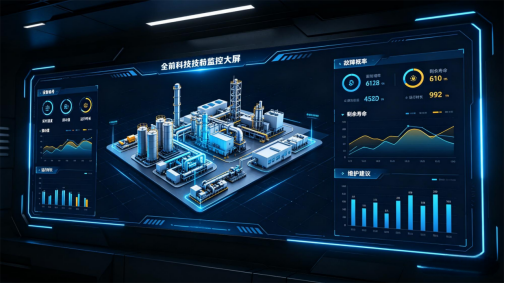
The primary step to reducing unexpected downtime is transitioning from reactive maintenance to data-driven predictive maintenance. Traditional preventive maintenance, which follows fixed schedules regardless of equipment condition, often leads to unnecessary costs or missed fault warnings, while reactive maintenance only addresses issues after breakdowns occur, resulting in prolonged downtime. Predictive maintenance, by contrast, uses advanced sensors and real-time data analysis to monitor key equipment indicators such as vibration, temperature and current, identifying early signs of wear or malfunction before they escalate into major failures. Easy Semiconductor recommends installing multi-dimensional sensors on critical equipment like motors, PLC modules and conveyors, and leveraging data analytics tools to track equipment health, predict remaining useful life and schedule maintenance during production lulls—avoiding unplanned disruptions. This proactive approach can reduce unexpected downtime by 40%-60% and extend equipment lifespan by 10%-15%.
Optimizing spare parts inventory management is another crucial measure to cut down unexpected downtime. Waiting for critical spare parts accounts for 50% of the mean time to repair (MTTR), turning a 1-hour repair into a multi-day outage when parts are out of stock. Many plants suffer from "phantom inventory"—discrepancies between system records and actual stock—due to unrecorded part usage, further exacerbating downtime risks. Easy Semiconductor advises manufacturers to adopt QR code scanning or digital inventory management systems to track spare parts in real time, automatically trigger reorders when stock levels drop and maintain a strategic reserve of high-priority parts such as PLC modules, sensors and semiconductor components. As a reliable spare parts supplier, the company provides timely delivery of genuine, compatible parts, ensuring that maintenance teams have the resources they need to resolve issues quickly and minimize production gaps.
Standardizing operational procedures and enhancing staff training are essential to reducing human error, a leading cause of unexpected downtime that accounts for up to 70% of all disruptions. Many downtime incidents stem from improper equipment operation, incorrect parameter settings or skipped maintenance steps—often due to inadequate training or over-reliance on worker experience. Easy Semiconductor recommends developing digital standard operating procedures (SOPs) accessible at each machine, guiding operators through startup checks, daily maintenance and emergency responses to standardize behavior and reduce mistakes. Additionally, regular technical training for operators and maintenance teams—covering equipment operation, fault diagnosis and basic repair skills—can significantly lower error rates. The company also offers professional training support, helping plants build a skilled workforce capable of identifying and addressing potential issues proactively.
Mitigating environmental and system-related risks also plays a key role in minimizing unexpected downtime. Harsh industrial environments—high temperature, high humidity, dust and corrosive gases—accelerate equipment aging and cause component failures, while electromagnetic interference from frequency converters and high-voltage cables disrupts signal transmission in PLC and control systems. Easy Semiconductor suggests installing industrial air conditioners and dust-proof enclosures to maintain stable operating conditions for equipment, using shielded cables to reduce electromagnetic interference and regularly cleaning modules and terminals to prevent poor contact. For digital system failures, such as MES or ERP crashes, the company recommends implementing backup systems and regular data backups to avoid "digital paralysis" that halts production entirely.
In conclusion, reducing unexpected downtime requires a holistic approach that combines predictive maintenance, optimized inventory management, standardized operations and environmental control. By adopting these strategies, manufacturing plants can not only minimize disruptions but also lower maintenance costs, improve overall equipment efficiency (OEE) and enhance competitiveness. Easy Semiconductor Technology (Hong Kong) Limited remains committed to supporting the manufacturing industry, providing high-quality industrial control components, professional technical consulting and one-stop solutions to help plants build resilient, efficient production systems. With the right tools, processes and support, manufacturers can turn unexpected downtime from a persistent challenge into a preventable issue, unlocking greater productivity and profitability.