
 home
home
 Published: Jun 06, 2026 11:22 AM
 Page View: 106
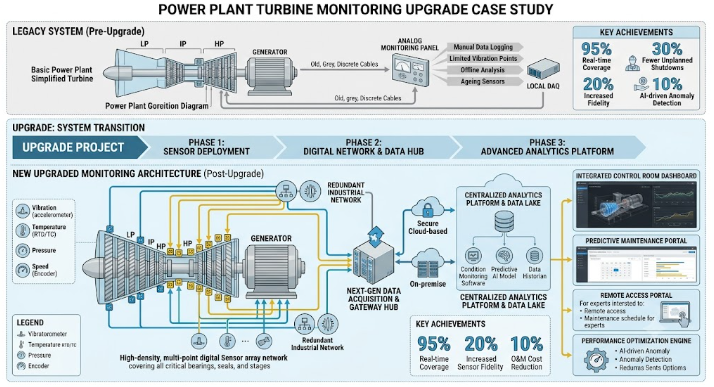
Easy Semiconductor Technology (Hong Kong) Limited recently completed a comprehensive turbine monitoring upgrade project for a large-scale power generation facility. The project was designed to improve turbine reliability, enhance operational visibility, reduce maintenance costs, and support long-term digital transformation initiatives within the power plant.
As power generation facilities face increasing pressure to improve efficiency, reduce unplanned downtime, and maintain reliable electricity production, advanced turbine monitoring systems have become a critical component of modern plant operations. This case study highlights how a strategic monitoring upgrade helped the customer achieve significant improvements in equipment performance and operational efficiency.
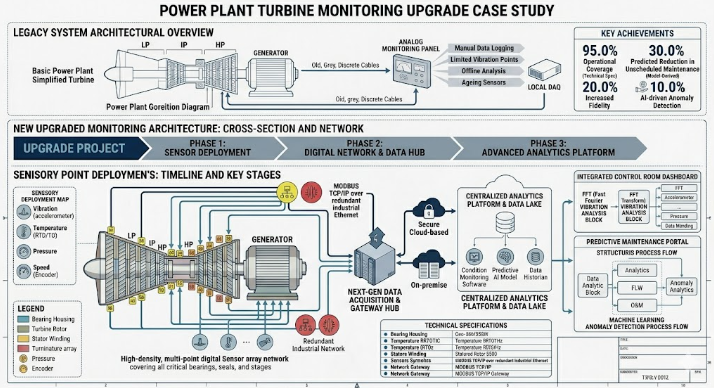
The power plant operates multiple steam turbines that serve as essential assets within the electricity generation process. While the existing monitoring infrastructure had provided years of service, it lacked the advanced diagnostic capabilities required to support modern predictive maintenance strategies.
Plant operators experienced several challenges, including:
Limited real-time visibility into turbine health
Aging monitoring equipment
Incomplete vibration analysis capabilities
Delayed fault detection
Increased maintenance workload
Limited integration with plant-wide automation systems
Management recognized the need for a modern turbine condition monitoring solution capable of delivering continuous performance data and early warning notifications.
Easy Semiconductor Technology (Hong Kong) Limited worked closely with plant engineers to establish clear project goals:
Upgrade turbine monitoring hardware and software
Improve vibration monitoring accuracy
Enable predictive maintenance capabilities
Integrate monitoring systems with existing SCADA infrastructure
Enhance asset management processes
Reduce unplanned turbine outages
Improve power generation efficiency
Support future Industrial IoT initiatives
The solution was designed to minimize operational disruption while delivering immediate and long-term benefits.
One of the most important components of the project was the deployment of advanced vibration monitoring technology.
New high-precision sensors were installed at critical turbine locations, including:
Turbine bearings
Rotor assemblies
Gear systems
Generator couplings
Auxiliary equipment
These sensors continuously measure vibration levels, enabling operators to identify abnormal operating conditions before they develop into serious equipment failures.
Real-time vibration analysis provides valuable insight into turbine performance and mechanical health, helping maintenance teams respond proactively rather than reactively.
The upgraded monitoring platform collects operational data from multiple sources across the turbine system.
Parameters monitored include:
Vibration levels
Shaft displacement
Bearing temperature
Lubrication system performance
Rotor speed
Steam pressure
Generator performance indicators
The centralized data acquisition architecture enables comprehensive equipment visibility throughout the power generation process.
A key requirement of the project was seamless integration with the plant’s existing SCADA system.
The new monitoring platform communicates directly with the supervisory control environment, allowing operators to access turbine health information through familiar interfaces.
Benefits of SCADA integration include:
Centralized monitoring
Faster alarm response
Improved operational awareness
Historical trend analysis
Simplified reporting
Enhanced decision-making
By integrating turbine diagnostics into existing operational workflows, plant personnel can respond more effectively to emerging equipment conditions.
Traditional maintenance programs often rely on fixed schedules that may not accurately reflect equipment condition.
The upgraded system introduces predictive maintenance capabilities by continuously analyzing equipment data and identifying patterns associated with developing faults.
Potential issues detected include:
Bearing wear
Rotor imbalance
Shaft misalignment
Lubrication deficiencies
Mechanical looseness
Excessive vibration trends
Early fault detection enables maintenance teams to schedule repairs during planned outages, reducing the risk of costly emergency shutdowns.
The project also established a foundation for Industrial Internet of Things (IIoT) integration.
Secure communication gateways allow operational data to be shared with enterprise-level analytics platforms and maintenance management systems.
This connectivity supports:
Remote monitoring
Performance benchmarking
Asset optimization
Reliability analysis
Digital transformation initiatives
The IIoT-ready architecture ensures scalability as future monitoring requirements evolve.
Following project completion, the power plant achieved several measurable improvements.
Continuous condition monitoring significantly improved turbine reliability by providing earlier detection of abnormal operating conditions.
Potential mechanical issues can now be identified before they result in equipment damage or production losses.
The predictive maintenance strategy helped reduce unexpected shutdowns by allowing maintenance activities to be scheduled proactively.
This reduction in downtime contributes directly to improved power generation availability.
Operators now have access to real-time turbine performance information through integrated dashboards and reporting tools.
Greater visibility supports faster troubleshooting and more informed operational decisions.
Condition-based maintenance practices reduce unnecessary inspections and component replacements while focusing resources on actual equipment needs.
As a result, maintenance budgets can be allocated more efficiently.
By maintaining turbines in optimal operating condition, the facility achieved improved performance stability and greater energy production efficiency.
Even small improvements in turbine performance can generate substantial long-term operational savings.
The successful turbine monitoring upgrade has created a strong foundation for future modernization projects.
Potential future enhancements include:
Artificial intelligence-based diagnostics
Machine learning predictive analytics
Digital twin technology
Advanced asset performance management
Cloud-based monitoring platforms
Enterprise-wide reliability programs
These technologies will further strengthen plant reliability and support ongoing operational excellence initiatives.
The Power Plant Turbine Monitoring Upgrade Project demonstrates how modern monitoring technologies can transform traditional maintenance practices and improve overall power plant performance.
Through advanced vibration monitoring, predictive maintenance tools, SCADA integration, and Industrial IoT connectivity, Easy Semiconductor Technology (Hong Kong) Limited delivered a comprehensive solution that enhances reliability, reduces operational risk, and supports long-term digital transformation goals.
As power generation facilities continue to pursue higher efficiency and greater asset reliability, intelligent turbine monitoring systems will remain a critical investment for sustainable and competitive operations.