
 home
home
 Published: Jun 01, 2026 10:34 PM
 Page View: 102
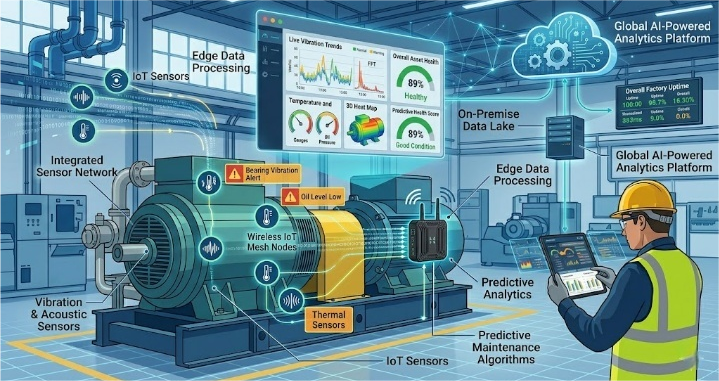
As industrial facilities continue to embrace digital transformation, equipment reliability has become a critical factor in maintaining operational efficiency and competitiveness. Unexpected machinery failures can lead to costly production interruptions, increased maintenance expenses, safety risks, and reduced profitability. To address these challenges, manufacturers are increasingly adopting smart condition monitoring solutions that provide real-time insights into equipment health and performance.
Industrial equipment condition monitoring has evolved far beyond traditional maintenance practices. Modern technologies now combine sensors, industrial communication networks, data analytics, artificial intelligence, and cloud-based platforms to deliver predictive maintenance capabilities and improved asset management. These smart solutions are helping organizations reduce downtime, optimize maintenance schedules, and extend equipment lifespan.
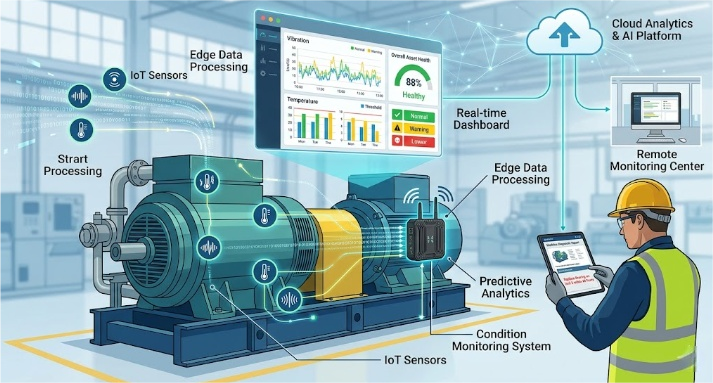
In today's highly automated production environments, equipment such as motors, pumps, compressors, conveyors, turbines, and process control systems operate continuously under demanding conditions. Even minor performance issues can escalate into major failures if not detected early.
Traditional maintenance strategies often rely on scheduled inspections or reactive repairs after failures occur. While these approaches may be effective in some situations, they frequently result in unnecessary maintenance activities or unexpected equipment breakdowns.
Condition monitoring offers a more intelligent approach by continuously tracking equipment performance and identifying abnormal operating conditions before serious problems develop.
This proactive strategy enables maintenance teams to make informed decisions based on actual equipment condition rather than fixed maintenance intervals.
Condition monitoring refers to the continuous or periodic measurement of equipment parameters to assess operational health and detect early signs of deterioration.
Common monitoring parameters include:
Vibration levels
Temperature
Pressure
Flow rate
Lubrication quality
Electrical current
Voltage characteristics
Acoustic emissions
Rotational speed
By analyzing these variables, maintenance teams can identify trends and predict potential failures before they impact production.
The foundation of modern condition monitoring systems is intelligent sensing technology.
Advanced industrial sensors can continuously collect data from critical equipment and transmit information to local control systems or centralized monitoring platforms.
Popular sensor technologies include:
Vibration monitoring is one of the most effective methods for detecting mechanical issues such as:
Bearing wear
Shaft misalignment
Rotor imbalance
Gearbox defects
Mechanical looseness
Early detection allows corrective actions before catastrophic failure occurs.
Abnormal temperature increases often indicate developing problems such as:
Motor overload
Electrical faults
Insufficient lubrication
Cooling system failures
Continuous temperature monitoring helps prevent equipment damage and fire hazards.
Electrical current analysis provides valuable insights into motor performance and energy consumption.
Changes in current patterns can reveal:
Mechanical loading issues
Motor degradation
Power supply abnormalities
Process inefficiencies
These measurements support both maintenance and energy optimization initiatives.
The Industrial Internet of Things (IIoT) has transformed condition monitoring capabilities by enabling seamless connectivity between field devices and enterprise systems.
IIoT-enabled monitoring solutions offer:
Remote equipment visibility
Centralized asset management
Real-time alerts
Data sharing across facilities
Cloud-based analytics
Operators can monitor equipment performance from virtually anywhere using secure dashboards and mobile applications.
This level of connectivity significantly improves maintenance responsiveness and operational awareness.
One of the most significant advantages of smart condition monitoring is the ability to support predictive maintenance strategies.
Instead of waiting for equipment failures, predictive maintenance uses historical and real-time data to forecast future problems.
Advanced analytics platforms evaluate:
Equipment operating trends
Failure patterns
Environmental conditions
Process variables
The system can then estimate when maintenance should be performed to prevent failures while maximizing equipment utilization.
This approach reduces unnecessary maintenance activities and lowers overall operating costs.
Artificial Intelligence (AI) is increasingly being integrated into industrial condition monitoring systems.
AI-powered algorithms can process large volumes of sensor data and identify subtle anomalies that may be difficult for human operators to detect.
Applications include:
Fault pattern recognition
Automated diagnostics
Failure prediction
Maintenance recommendations
Root cause analysis
As machine learning models continuously improve, organizations can achieve higher levels of predictive accuracy and operational reliability.
Many industrial facilities already utilize PLC and DCS platforms to manage process control operations.
Integrating condition monitoring data into existing automation systems provides several advantages:
Unified operational visibility
Faster alarm response
Improved maintenance planning
Simplified troubleshooting
Enhanced process optimization
Operators can view equipment health information directly from HMI screens and SCADA interfaces, allowing quicker decision-making.
This integration creates a more comprehensive view of plant performance and asset condition.
Unplanned downtime remains one of the most expensive challenges facing industrial organizations.
Smart condition monitoring solutions help reduce downtime by:
Detecting faults early
Preventing catastrophic failures
Improving maintenance scheduling
Reducing emergency repairs
Optimizing spare parts inventory
Many facilities report significant reductions in maintenance costs and equipment failures after implementing predictive monitoring programs.
The return on investment is often realized through increased production availability and lower operational expenses.
Condition monitoring technologies are widely used across numerous industrial sectors, including:
Monitoring production machinery to improve reliability and throughput.
Protecting pumps, compressors, and rotating equipment in critical operations.
Ensuring reliable performance of turbines, generators, and auxiliary systems.
Monitoring pumps, blowers, and treatment equipment to maintain service continuity.
Reducing downtime in harsh operating environments with high equipment utilization rates.
The versatility of condition monitoring makes it a valuable tool for virtually any industrial operation.
As Industry 4.0 technologies continue to evolve, condition monitoring systems will become increasingly sophisticated.
Future developments may include:
Digital twins
Edge computing
Autonomous maintenance systems
Advanced AI diagnostics
Self-learning predictive models
These innovations will further improve asset reliability, operational efficiency, and maintenance effectiveness.
Organizations that invest in smart monitoring technologies today will be better positioned to compete in tomorrow's increasingly digital industrial landscape.
Smart industrial equipment condition monitoring solutions are transforming maintenance practices across the global manufacturing sector. By leveraging intelligent sensors, IIoT connectivity, predictive analytics, and AI-driven diagnostics, organizations can detect equipment problems earlier, reduce downtime, lower maintenance costs, and improve operational performance.
As industries pursue greater efficiency and reliability, condition monitoring will continue to play a vital role in achieving sustainable and profitable operations.
About Easy Semiconductor Technology (Hong Kong) Limited
Easy Semiconductor Technology (Hong Kong) Limited is a global supplier of industrial automation products, PLC systems, DCS modules, industrial communication equipment, and control solutions. The company provides reliable sourcing services and technical support to customers worldwide, helping manufacturers improve equipment reliability, production efficiency, and operational performance through advanced automation technologies.