
 home
home
 Published: Jun 01, 2026 10:17 PM
 Page View: 154
In today's highly automated industrial environment, Programmable Logic Controllers (PLCs) serve as the backbone of manufacturing operations. From assembly lines and packaging systems to chemical processing plants and power generation facilities, PLCs are responsible for controlling critical processes and ensuring smooth production flow.
However, aging hardware, discontinued models, unexpected failures, and modernization projects often require PLC replacement. While upgrading control systems can improve reliability and performance, poorly planned PLC replacements may result in costly production downtime, safety risks, and lost revenue.
This article explores proven strategies manufacturers can use to minimize production downtime during PLC replacement projects while maintaining operational efficiency and system integrity.
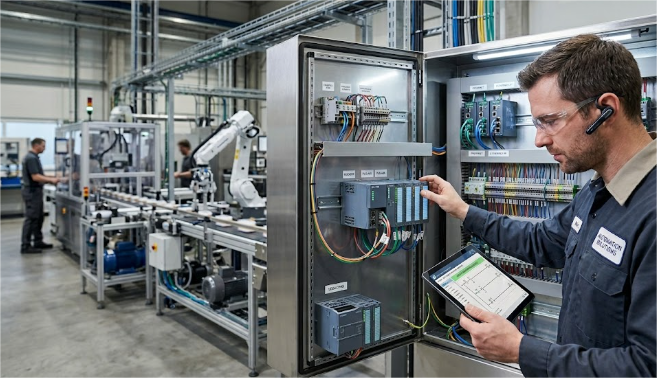
Many industrial facilities continue operating PLC systems that were installed more than 10 or even 20 years ago. Although these systems may still function, several factors can make replacement unavoidable:
Obsolete hardware and discontinued spare parts
Increased maintenance costs
Limited communication capabilities
Difficulty integrating with modern SCADA and MES platforms
Reduced system reliability
Higher risk of unexpected failures
As industrial automation technology advances, upgrading legacy PLC systems often becomes more cost-effective than maintaining outdated equipment.
Unplanned downtime can have significant financial consequences. Depending on the industry, production interruptions may result in:
Lost production output
Missed delivery schedules
Increased labor expenses
Product quality issues
Customer dissatisfaction
Regulatory compliance risks
For large manufacturing facilities, even a few hours of downtime can cost thousands or even millions of dollars. Therefore, minimizing disruption during PLC replacement is a top priority for plant managers and maintenance teams.
Before replacing any PLC, organizations should perform a detailed assessment of the existing control system.
Key areas to evaluate include:
PLC hardware configuration
I/O modules and field devices
Communication networks
HMI interfaces
Safety systems
Control logic documentation
A complete inventory helps engineers identify potential compatibility issues and avoid unexpected challenges during installation.
Documenting every component before replacement reduces engineering risks and accelerates commissioning activities.
Successful PLC replacement projects begin with careful planning.
The migration plan should include:
Project objectives
Hardware selection
Software conversion strategy
Testing procedures
Installation schedule
Rollback contingency plans
Creating a clear roadmap enables all stakeholders—including engineering, maintenance, production, and management teams—to understand project milestones and responsibilities.
Facilities that invest time in planning typically experience significantly shorter downtime during implementation.
One of the most effective ways to reduce downtime is performing as much work as possible before the actual shutdown window.
Modern engineering tools allow engineers to:
Simulate PLC logic
Verify communication protocols
Test HMI functionality
Validate alarm management systems
Check sequence operations
Offline testing identifies software errors before installation and reduces troubleshooting time during startup.
By resolving issues in advance, manufacturers can shorten commissioning periods and return to production faster.
Waiting until shutdown begins to assemble hardware can significantly extend downtime.
Instead, manufacturers should:
Pre-configure PLC processors
Install firmware updates
Prepare I/O modules
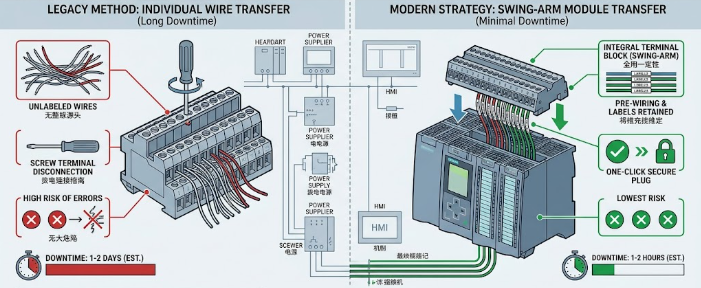
Label cables and terminals
Verify network settings
Test power supplies
A fully prepared replacement system allows technicians to focus solely on installation and validation during the planned outage.
Whenever possible, PLC replacement should be aligned with scheduled plant shutdowns.
Ideal opportunities include:
Annual maintenance periods
Holiday shutdowns
Production changeovers
Planned equipment upgrades
Combining PLC replacement with existing maintenance activities minimizes the impact on production schedules and avoids additional downtime.
Proper coordination between operations and engineering departments is essential for maximizing efficiency.
Before disconnecting any existing PLC, complete backups should be created and verified.
Critical backup data includes:
PLC programs
Configuration files
HMI applications
Network settings
Historical parameters
A validated backup ensures the original system can be restored if unexpected issues occur during migration.
Having a rollback strategy significantly reduces operational risk and provides additional confidence during implementation.
Technology upgrades often introduce new software platforms, diagnostics, and operating procedures.
Operators, maintenance personnel, and engineers should receive training before the new PLC system goes live.
Training should cover:
System navigation
Alarm handling
Troubleshooting procedures
Network diagnostics
Preventive maintenance practices
Well-trained personnel can quickly identify and resolve minor issues, reducing post-installation disruptions.
For large facilities, replacing an entire PLC system at once may not be practical.
A phased migration strategy allows organizations to:
Upgrade sections incrementally
Reduce project risk
Validate performance step by step
Maintain partial production capability
Many manufacturers successfully modernize automation systems by upgrading one production line or process area at a time.
This approach minimizes operational disruption while spreading project costs over a longer period.
PLC migration projects often involve complex engineering challenges, particularly when dealing with legacy systems from multiple vendors.
Working with experienced automation professionals can provide:
Technical expertise
System integration support
Hardware sourcing assistance
Software conversion services
Startup and commissioning support
An experienced partner helps identify potential issues early and ensures a smoother transition from old systems to modern automation platforms.
PLC replacement should not be viewed solely as a maintenance activity. Instead, it represents an opportunity to enhance production efficiency, improve reliability, and support future digital transformation initiatives.
Modern PLC platforms offer:
Faster processing speeds
Advanced cybersecurity features
Enhanced connectivity
Predictive maintenance capabilities
Better integration with Industry 4.0 technologies
Organizations that proactively modernize aging control systems are better positioned to improve productivity and remain competitive in increasingly demanding markets.
Minimizing production downtime during PLC replacement requires careful planning, detailed system assessment, comprehensive testing, and effective execution. By preparing hardware in advance, leveraging simulation tools, maintaining reliable backups, and training personnel, manufacturers can significantly reduce operational disruptions while maximizing the benefits of automation modernization.
As industrial facilities continue to adopt smarter manufacturing technologies, strategic PLC replacement projects will play a critical role in ensuring long-term reliability, efficiency, and sustainable growth.
About Easy Semiconductor Technology (Hong Kong) Limited
Easy Semiconductor Technology (Hong Kong) Limited specializes in industrial automation products, PLC systems, DCS modules, industrial communication equipment, and control system solutions. The company supports customers worldwide with reliable sourcing services, technical expertise, and automation modernization solutions that help improve operational performance and reduce downtime across industrial sectors.