
 home
home
 Published: May 30, 2026 01:00 PM
 Page View: 135
Servo drives are critical components in modern industrial automation systems, playing a pivotal role in controlling the speed, torque, and position of electric motors with high precision. Their reliability directly affects production efficiency, product quality, and equipment longevity. However, like any sophisticated electronic system, servo drives are prone to certain failures. Understanding these common issues and their repair methods is essential for maintaining continuous operation and minimizing downtime.
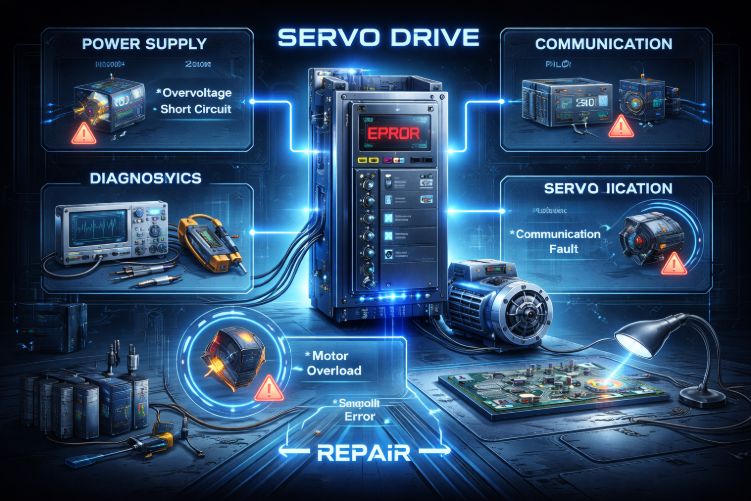
Servo drives integrate complex power electronics, control circuits, and feedback mechanisms. Failures can originate from multiple sources, including electrical overloads, mechanical wear, environmental factors, and human errors. The most common failures can be categorized into electrical faults, communication errors, mechanical-related issues, and thermal problems.
Electrical faults are the most frequently observed problems in servo drives. They include:
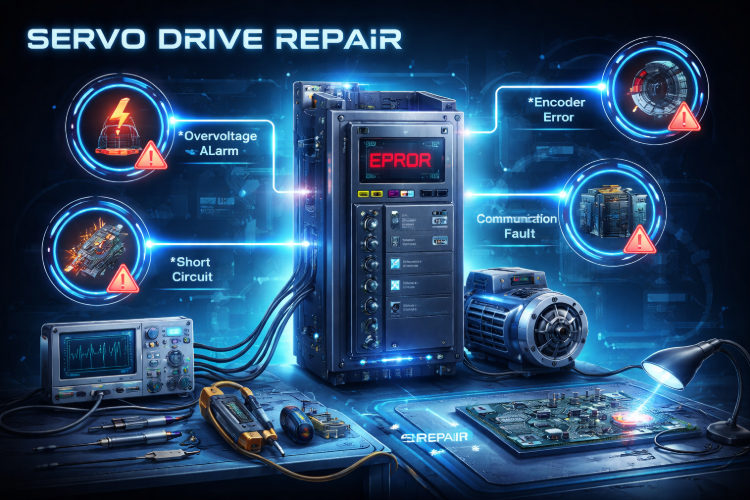
Overvoltage and Undervoltage: Fluctuations in power supply can trigger protection circuits, causing the drive to shut down. Overvoltage often damages power transistors or capacitors, while undervoltage can lead to unexpected stoppages.
Short Circuits: Internal component failures, such as shorted IGBTs or damaged motor windings, may result in immediate drive shutdown or blown fuses.
Power Supply Failures: The drive’s internal power supply can fail due to capacitor aging or transient surges.
Repair Methods: Diagnosing electrical faults requires measuring input voltages, inspecting circuit boards, and checking for blown fuses or burned components. Replacing damaged transistors, capacitors, or rectifiers is common, and in some cases, recalibrating the drive after component replacement ensures stable operation.
Servo drives rely on precise communication with controllers such as PLCs or motion controllers. Common communication failures include:
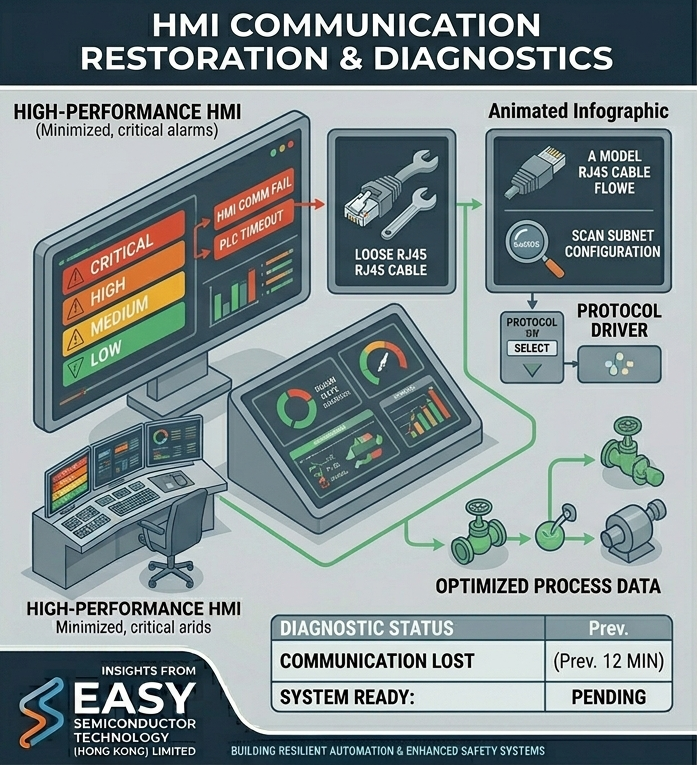
Fieldbus Disconnection: Faulty cables, loose connectors, or electromagnetic interference can disrupt signals.
Protocol Mismatch: Incorrect configuration between the drive and controller can cause erratic motion or alarms.
Encoder Feedback Errors: Malfunctioning encoders provide incorrect positional information, leading to abnormal drive behavior.
Repair Methods: Solutions include checking and replacing cables and connectors, verifying network settings, updating firmware, and inspecting or recalibrating encoders. Maintaining clean wiring and shielding can prevent recurrent issues.
Although servo drives are electronic devices, they are tightly coupled with mechanical systems. Mechanical problems can indirectly cause drive faults:
Motor Overload: Excessive torque or binding in mechanical components can trigger overcurrent alarms.
Coupling Misalignment: Misaligned couplings or gears can cause abnormal vibration, affecting drive performance.
Bearing Wear: Degraded motor bearings can increase load and heat, accelerating drive failure.
Repair Methods: Regular mechanical inspections, lubrication, and alignment checks are essential. Replacing worn bearings or recalibrating mechanical couplings can prevent electrical overloads and extend drive life.
Heat is a critical factor in servo drive reliability. Overheating can arise from high ambient temperatures, poor ventilation, or sustained high-load operation.
Repair Methods: Ensuring adequate ventilation, cleaning cooling fans, and monitoring drive temperature can prevent thermal damage. In severe cases, replacing heat sinks, fans, or thermally damaged components may be necessary.
To minimize downtime and extend the lifespan of servo drives, industrial operators should adopt proactive maintenance strategies:
Regular Inspection: Periodically check drives for dust accumulation, loose connectors, and signs of overheating.
Environmental Control: Maintain stable temperature, humidity, and clean airflow in drive cabinets.
Load Management: Avoid overloading motors and ensure smooth mechanical motion.
Firmware and Software Updates: Keep drive firmware and controllers up to date to prevent communication or compatibility issues.
Professional Repair Services: Partnering with specialized service providers like Easy Semiconductor Technology ensures accurate diagnosis and safe repairs.
Servo drives are the backbone of precise motion control in modern manufacturing, but their complexity makes them vulnerable to electrical, communication, mechanical, and thermal failures. Timely identification and effective repair methods are crucial to prevent prolonged downtime and costly production losses. By combining proactive maintenance, careful monitoring, and professional repair support, manufacturers can ensure that their servo drives operate reliably and efficiently for years to come.
Easy Semiconductor Technology (Hong Kong) Limited remains committed to supporting industrial clients with advanced diagnostic tools, expert repair services, and comprehensive technical guidance, enabling seamless production even in high-demand environments.