
 home
home
 Published: May 27, 2026 09:08 AM
 Page View: 127
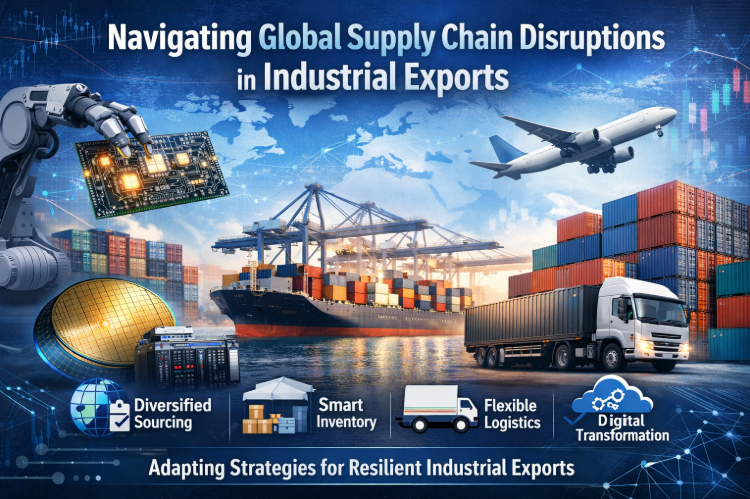
In recent years, global industrial exporters have faced unprecedented challenges across supply chains. From semiconductor shortages and rising freight costs to geopolitical tensions and changing trade policies, industrial manufacturers are operating in an environment where flexibility and resilience have become essential for survival. Companies involved in automation, semiconductor equipment, PLC systems, sensors, robotics, and industrial control components must now rethink traditional procurement and logistics strategies to maintain competitiveness in international markets.
Industrial supply chains have become increasingly interconnected. A single production line may rely on electronic components from multiple countries, while final assembly and export operations occur in entirely different regions. This interconnected structure improves efficiency during stable periods but also increases vulnerability when disruptions occur.
Several factors continue affecting industrial exports worldwide:
Semiconductor manufacturing bottlenecks
Rising transportation and energy costs
Port congestion and shipping delays
Geopolitical trade restrictions
Currency fluctuations
Raw material shortages
Increasing environmental regulations
For industrial exporters, even minor interruptions can lead to significant production delays, contractual penalties, and customer dissatisfaction.
The global semiconductor industry remains one of the most critical sectors affected by supply chain instability. Industrial automation systems, robotics controllers, programmable logic controllers (PLCs), and sensor technologies all depend heavily on semiconductor availability.
During recent years, many manufacturers experienced delays of several months for essential electronic components. Some industrial clients were forced to postpone factory upgrades or equipment maintenance projects because replacement modules were unavailable.
As demand for smart manufacturing and industrial automation continues growing, competition for high-performance chips and industrial-grade electronic components remains intense. Exporters capable of maintaining stable inventories gain significant advantages in the global marketplace.
Easy Semiconductor Technology (Hong Kong) Limited addresses these challenges by building long-term relationships with reliable suppliers and maintaining strategic inventories for critical industrial components. This approach helps customers reduce downtime and maintain production continuity even during periods of market uncertainty.
One of the most effective ways industrial exporters manage disruptions is through supplier diversification. Relying on a single region or manufacturer for critical components creates unnecessary risks.
Modern industrial companies increasingly adopt multi-source procurement strategies that include suppliers from different countries and regions. This diversification improves resilience while reducing dependency on any single supply channel.
For example, industrial automation exporters may source:
Sensors from Japan
PLC modules from Europe
Semiconductors from Taiwan
Industrial connectors from South Korea
Power supply systems from China
This geographically diversified model allows businesses to respond more effectively when disruptions occur in one market.
In addition, companies are investing in digital procurement systems that provide real-time supplier visibility, inventory tracking, and predictive risk analysis. These technologies help procurement teams identify potential disruptions before they impact production schedules.
Traditional “just-in-time” inventory models are no longer sufficient in highly volatile global markets. Many industrial exporters are now shifting toward hybrid inventory strategies that combine operational efficiency with safety stock reserves.
Maintaining strategic inventories for high-demand industrial components can significantly reduce operational risks. Although carrying additional inventory increases short-term storage costs, it often prevents far greater financial losses caused by production stoppages.
Industrial sectors particularly dependent on stable inventories include:
Semiconductor manufacturing
Factory automation
Renewable energy systems
Automotive production
Pharmaceutical manufacturing
Data center infrastructure
Advanced inventory forecasting tools powered by artificial intelligence also help exporters better predict customer demand and optimize stock allocation across global warehouses.
Easy Semiconductor Technology (Hong Kong) Limited continuously improves inventory management systems to ensure rapid response capabilities for international customers requiring urgent industrial automation components.
Shipping disruptions remain one of the biggest challenges in international industrial trade. Delayed cargo shipments, container shortages, and fluctuating freight rates continue affecting exporters worldwide.
To minimize logistics risks, successful industrial exporters are adopting more flexible transportation strategies, including:
Multi-port shipping options
Regional warehouse networks
Alternative freight forwarding partnerships
Combined air and sea transportation models
Localized distribution centers
By developing flexible logistics networks, exporters can adapt quickly when disruptions affect specific shipping routes or transportation hubs.
Digital logistics platforms also improve visibility throughout the supply chain, allowing exporters and customers to monitor shipment progress in real time. This transparency improves communication and enables faster problem-solving when delays occur.
Technology plays a critical role in modern supply chain management. Industrial exporters increasingly rely on digital platforms, cloud-based monitoring systems, and AI-driven analytics to improve operational resilience.
Smart supply chain technologies provide several advantages:
Real-time inventory visibility
Predictive maintenance insights
Automated procurement workflows
Risk forecasting capabilities
Enhanced supplier communication
Faster demand forecasting
Industrial Internet of Things (IIoT) systems also allow manufacturers to monitor equipment performance and component usage more accurately, helping reduce unexpected downtime.
As smart manufacturing expands globally, digital integration between suppliers, exporters, logistics providers, and end users becomes increasingly important for maintaining efficient operations.
In times of uncertainty, reliable service becomes one of the most valuable competitive advantages. Industrial clients prioritize suppliers capable of delivering stable support, transparent communication, and fast technical assistance.
Exporters that respond quickly to disruptions often strengthen long-term customer relationships. Proactive communication regarding delivery timelines, inventory availability, and alternative product solutions helps customers make informed operational decisions.
Easy Semiconductor Technology (Hong Kong) Limited focuses on providing dependable industrial automation solutions, responsive customer service, and stable global supply support to help clients navigate increasingly complex international markets.
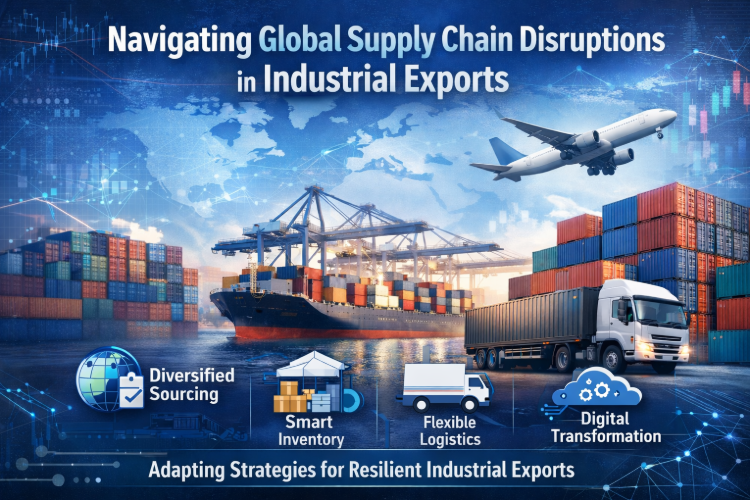
Although global supply chain challenges are likely to continue in the coming years, industrial exporters are becoming more adaptable and technologically advanced. Companies investing in diversified sourcing, digital transformation, intelligent inventory systems, and flexible logistics networks will remain better positioned for long-term growth.
The future of industrial exports will increasingly depend on resilience rather than simply cost efficiency. Businesses capable of balancing operational flexibility with technological innovation will gain stronger positions in the global manufacturing ecosystem.
As industries worldwide continue accelerating automation, semiconductor adoption, and smart manufacturing initiatives, supply chain resilience will remain a key factor driving export success. Companies prepared to adapt quickly to changing market conditions will continue leading the next generation of industrial global trade.