
 home
home
 Published: May 21, 2026 12:14 PM
 Page View: 119
In 2026, industrial manufacturers worldwide are increasingly prioritizing the modernization of their automation systems, with Siemens PLC (Programmable Logic Controller) upgrades taking center stage. As legacy PLC systems age, companies are faced with challenges ranging from spare parts scarcity to rising maintenance costs, driving a surge in strategic upgrade initiatives this year.
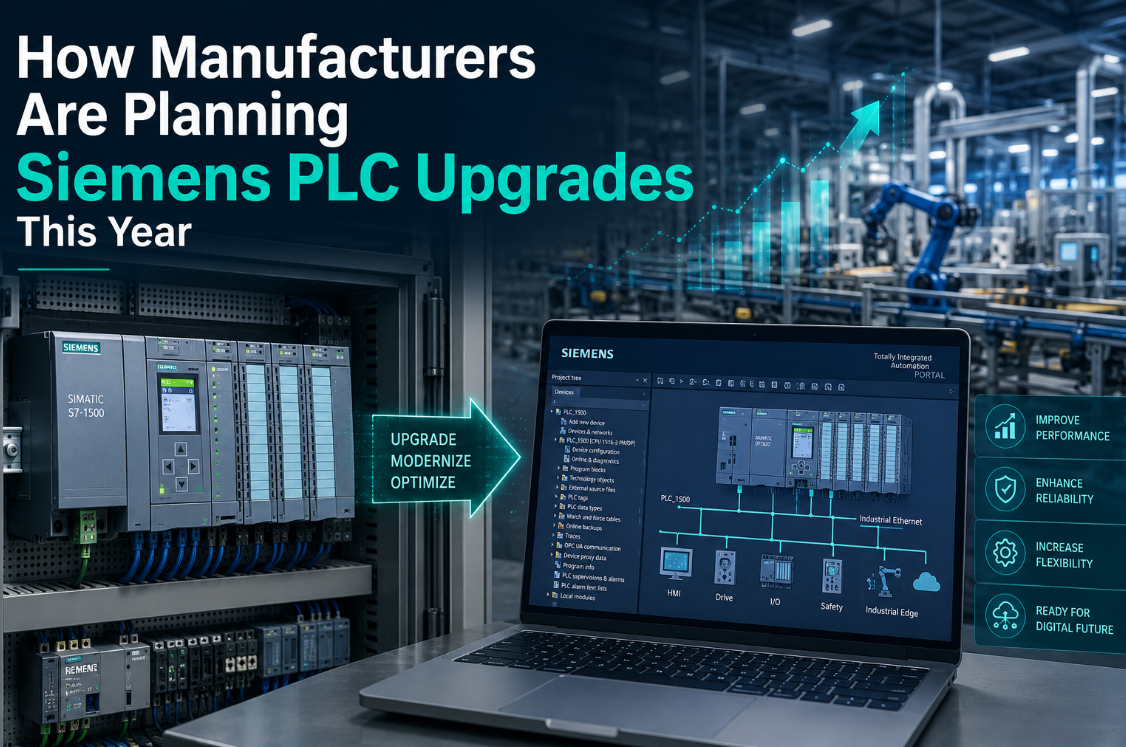
The Push for Siemens PLC Upgrades
Legacy Siemens PLCs, widely deployed across industries such as automotive, chemical processing, and energy production, are reaching the end of their operational lifespans. Manufacturers are experiencing increased downtime risks due to obsolete modules, software incompatibilities, and slower processing speeds. Upgrading to newer Siemens PLC models offers a pathway to enhanced system reliability, faster processing capabilities, and improved integration with modern industrial IoT solutions.
A recent survey conducted by Easy Semiconductor Technology (Hong Kong) Limited indicates that over 60% of manufacturers plan to replace at least one major PLC system in 2026. The primary drivers are equipment obsolescence, rising maintenance costs, and the need to integrate with digital twin and predictive maintenance technologies.
Strategic Approaches to PLC Upgrades
Manufacturers are adopting several strategies to ensure seamless Siemens PLC upgrades:
Phased Replacement: Rather than replacing entire systems at once, many manufacturers are implementing phased upgrades. This approach allows for minimal production disruption and gradual integration of new features.
Hybrid Systems: Some companies are integrating new Siemens PLCs with existing legacy equipment, creating hybrid systems that extend the operational life of older components while benefiting from modern PLC functionalities.
Predictive Planning: Advanced analytics and predictive maintenance tools are being leveraged to identify which PLCs are at highest risk of failure, allowing manufacturers to prioritize upgrades effectively.
These strategies not only reduce operational downtime but also optimize capital expenditure, making upgrades more financially manageable.
The Role of Supply Chain Partners
Upgrading Siemens PLCs in 2026 requires careful coordination with suppliers. Manufacturers are increasingly relying on specialized vendors, such as Easy Semiconductor Technology (Hong Kong) Limited, to source both legacy and new PLC modules, ensuring continuity in production. Supply chain reliability is particularly critical given the ongoing global shortage of certain electronic components, which has made timely access to replacement modules a key consideration for industrial planners.
Moreover, suppliers are assisting manufacturers with software migration, configuration, and testing, streamlining the upgrade process. These value-added services are helping companies avoid extended downtime and reduce the risk of operational errors during the transition.
Technological Advancements Driving Upgrades
Siemens’ latest PLC models feature enhanced connectivity, cloud integration, and compatibility with Industry 4.0 standards. These technological improvements allow manufacturers to implement real-time monitoring, data-driven decision-making, and automated process optimization. By upgrading, companies can leverage advanced functions such as predictive maintenance alerts, energy consumption monitoring, and remote troubleshooting capabilities.
In addition, new PLCs support improved cybersecurity measures, a growing concern for manufacturers facing increasingly sophisticated cyber threats. Upgrading legacy systems ensures that industrial networks are better protected against potential breaches that could disrupt production.
Challenges and Considerations
Despite the clear benefits, Siemens PLC upgrades in 2026 are not without challenges. Manufacturers must carefully plan system downtime, train staff on new equipment, and manage data migration from older PLC platforms. Budget constraints and supply chain delays also pose risks to project timelines.
To address these challenges, leading manufacturers are forming cross-functional teams that include engineering, IT, and operations personnel to coordinate every aspect of the upgrade. Partnering with experienced vendors ensures that technical guidance and support are available throughout the transition, minimizing operational risk.
Looking Ahead
As 2026 progresses, Siemens PLC upgrades are set to become a central theme in industrial automation. Companies that proactively plan these upgrades are likely to see improved operational efficiency, enhanced system reliability, and greater agility in responding to market demands.
For manufacturers, the message is clear: strategic Siemens PLC upgrades are not just a technical necessity—they are a critical investment in the long-term sustainability and competitiveness of industrial operations. With the right planning, reliable suppliers, and modern technologies, 2026 represents an opportunity for manufacturers to transform their automation landscapes and drive forward into a new era of industrial excellence.