
 home
home
 Published: May 21, 2026 12:33 PM
 Page View: 110
In today’s highly competitive semiconductor manufacturing landscape, even a few hours of unplanned downtime can result in significant financial losses. For many facilities, legacy Distributed Control Systems (DCS) are often at the center of this challenge, limiting efficiency, increasing maintenance costs, and creating vulnerabilities in production continuity. A recent case study demonstrates how a strategic DCS modernization initiative can dramatically reduce unplanned downtime while improving overall plant performance.
The Challenge: Aging Infrastructure and Production Interruptions
The client, a mid-sized semiconductor fabrication plant in the Asia-Pacific region, had been operating a DCS platform that was over a decade old. While the system had reliably supported production for years, aging hardware and outdated software had started to manifest as frequent failures and unexpected interruptions. Maintenance teams reported increasing instances of system crashes, communication errors between controllers, and slow response times during critical process adjustments.
These issues led to recurring unplanned downtime, sometimes exceeding eight hours per month, directly impacting production schedules and escalating operational costs. Furthermore, the old DCS was not compatible with newer plant equipment, limiting the ability to implement advanced monitoring, predictive maintenance, and real-time analytics.
The Solution: Comprehensive DCS Modernization
Recognizing the urgency, the plant partnered with Easy Semiconductor Technology (Hong Kong) Limited to execute a full DCS modernization program. The modernization process focused on three key areas: hardware upgrades, software migration, and integration with advanced analytics.
Hardware Upgrades:
Legacy controllers and I/O modules were replaced with modern, high-reliability components designed for continuous industrial operation. Redundant servers were introduced to ensure failover capabilities and minimize system interruptions.
Software Migration:
The plant migrated to a next-generation DCS platform, featuring intuitive human-machine interfaces (HMI), enhanced process visualization, and support for open protocols. The migration also included rigorous testing to ensure minimal disruption during the transition.
Integration and Analytics:
The modern DCS was integrated with the facility’s asset management system and predictive maintenance tools. This allowed engineers to monitor equipment performance in real time, identify potential failures before they occurred, and implement proactive maintenance strategies.
Results: Dramatic Reduction in Downtime and Operational Benefits
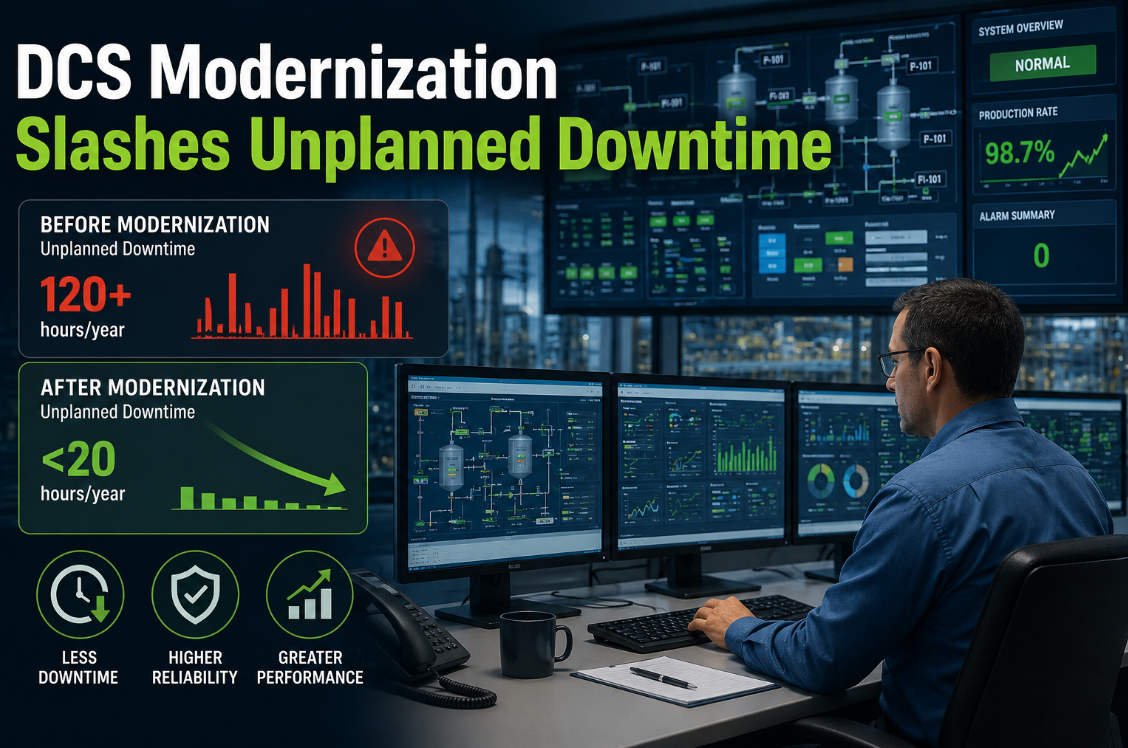
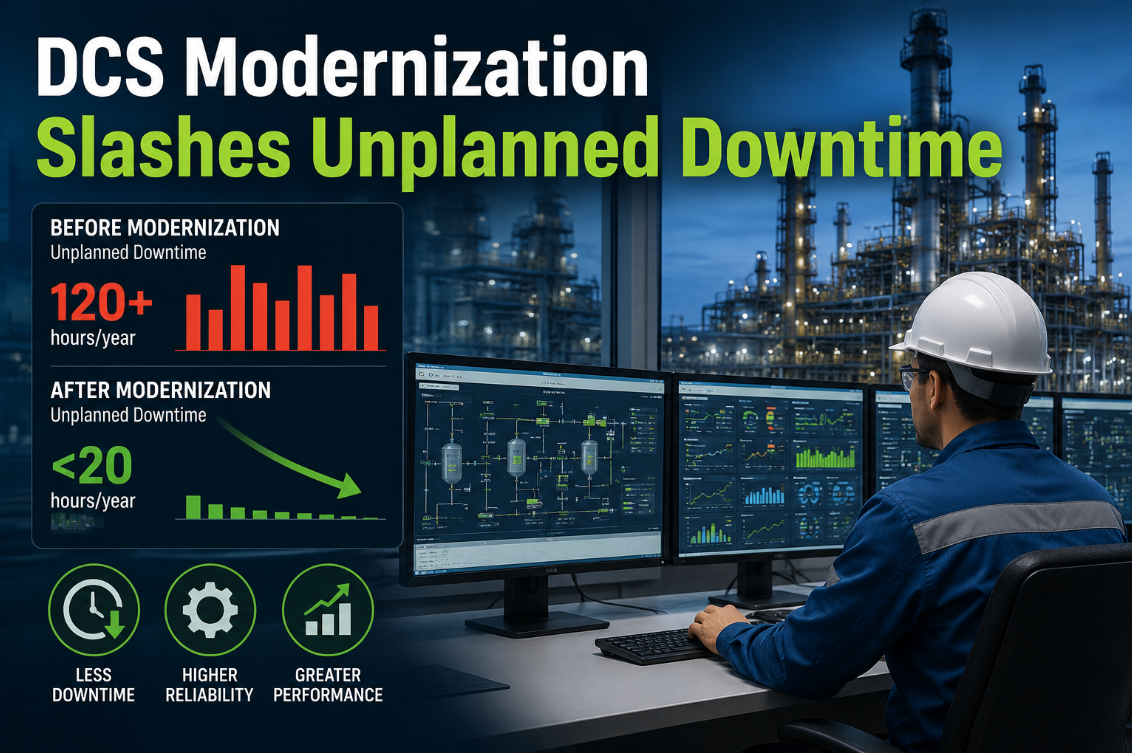
Following the DCS modernization, the plant reported a significant reduction in unplanned downtime—from eight hours per month to less than one hour. The new system’s redundancy and reliability ensured continuous operation, even during scheduled maintenance or minor equipment malfunctions.
Additionally, the integration of advanced analytics enabled predictive maintenance, optimizing equipment life cycles and reducing spare parts inventory costs. Operators benefited from faster response times, clearer process insights, and improved decision-making capabilities, ultimately enhancing overall production efficiency.
The plant also reported a measurable improvement in safety and regulatory compliance. The modern DCS provided automated alerts for critical process deviations, ensuring timely interventions and reducing the risk of accidents or product quality issues.
Key Takeaways
This case study highlights several important lessons for semiconductor manufacturers considering DCS upgrades:
Preventative Maintenance is Key: Modern DCS platforms allow for predictive maintenance, minimizing the risk of costly unplanned downtime.
Integration Boosts Efficiency: Connecting DCS systems with analytics and asset management software maximizes operational insight and decision-making.
Future-Proofing Production: Upgrading to modern hardware and software ensures compatibility with emerging technologies and process automation initiatives.
Conclusion
DCS modernization is no longer just a technical upgrade—it is a strategic investment in operational reliability, production efficiency, and long-term competitiveness. As demonstrated by this case study, partnering with a trusted technology provider like Easy Semiconductor Technology (Hong Kong) Limited can ensure a seamless transition, delivering measurable improvements in uptime, process control, and overall plant performance.
For semiconductor manufacturers facing aging control systems, a proactive modernization approach can transform operational challenges into opportunities for growth, reliability, and sustainable production.