
 home
home
 Published: May 26, 2026 12:36 PM
 Page View: 105
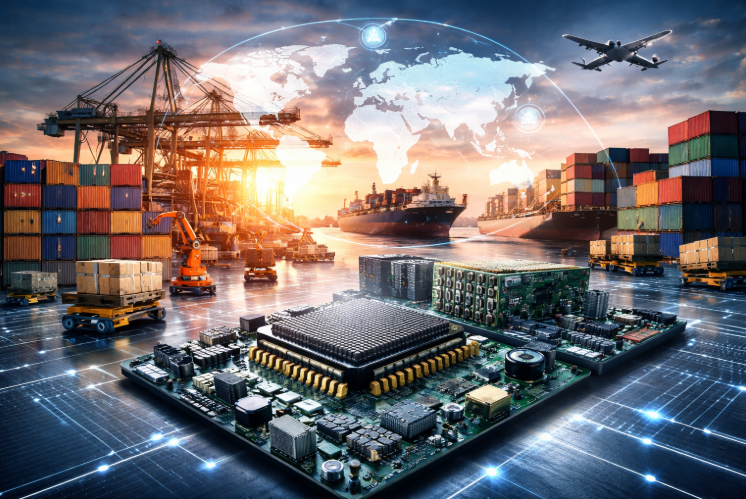
In today’s rapidly changing global economy, resilient supply chains have become one of the most critical factors behind successful industrial exports. From semiconductor manufacturing to industrial automation, companies around the world are facing increasing pressure from geopolitical tensions, transportation delays, raw material shortages, and unpredictable market demand. Businesses that can build flexible and reliable supply chains are now gaining a major competitive advantage in international trade.
The industrial export sector, particularly electronics and semiconductor-related industries, depends heavily on a smooth and uninterrupted flow of materials, components, and logistics services. A single disruption can delay production schedules, increase operational costs, and damage customer relationships. As a result, manufacturers and exporters are investing more heavily in supply chain resilience strategies to ensure long-term stability and growth.
Over the past few years, global supply chains have experienced significant disruptions. The pandemic exposed vulnerabilities in international manufacturing networks, while geopolitical conflicts and trade restrictions further complicated procurement and logistics operations. Rising shipping costs, port congestion, and labor shortages also created additional pressure for exporters.
For companies involved in industrial automation and semiconductor equipment exports, the challenges are even more complex. Many critical components such as PLC modules, integrated circuits, sensors, and power management devices rely on highly specialized manufacturing ecosystems spread across multiple countries. Delays in one region can quickly impact production worldwide.
In addition, customers now expect faster delivery times, greater transparency, and stable pricing. Exporters must therefore balance efficiency, cost control, and flexibility while maintaining product quality and customer satisfaction.
A resilient supply chain is not simply about avoiding disruptions. It is about building the capability to adapt, recover, and continue operating under uncertain conditions. Companies with resilient supply chains can respond more effectively to unexpected events while minimizing operational downtime.
For industrial exporters, resilience offers several important benefits:
Reliable supply chains reduce the risk of production interruptions. Manufacturers can maintain consistent output even during periods of market volatility or logistics disruptions.
International buyers value suppliers that can deliver products on time despite global uncertainties. Consistent delivery performance strengthens long-term partnerships and improves brand reputation.
Flexible sourcing and inventory management allow exporters to respond quickly to changes in customer demand, technology trends, and regional market conditions.
Supply chain disruptions often lead to increased freight costs, emergency procurement expenses, and production losses. Resilience strategies help reduce these unexpected financial burdens.
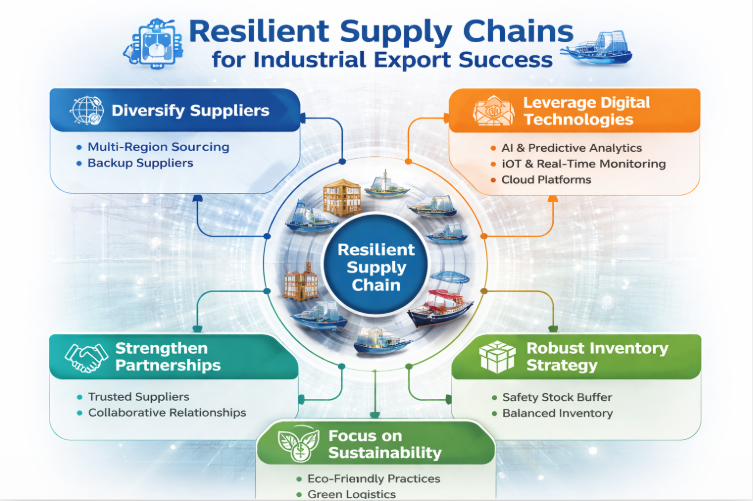
One of the most effective ways to strengthen supply chain resilience is supplier diversification. Many companies previously relied heavily on a single supplier or manufacturing region to reduce costs. However, recent global events have demonstrated the risks of overdependence.
Industrial exporters are now expanding their supplier networks across multiple countries and regions. This approach reduces the likelihood that a local disruption will halt global operations. Companies are also building stronger relationships with backup suppliers to ensure continuity during emergencies.
For semiconductor and industrial automation businesses, diversification may include sourcing obsolete PLC modules, sensors, and electronic components from multiple verified channels. Maintaining access to alternative inventory sources can significantly reduce lead times and production delays.
Digital transformation is playing a major role in improving supply chain resilience. Advanced technologies provide companies with greater visibility, predictive insights, and operational control across the entire supply network.
AI-powered systems can analyze supply chain data to identify risks before they become major problems. Predictive analytics help businesses forecast demand fluctuations, shipping delays, and inventory shortages more accurately.
IoT-enabled devices allow manufacturers to monitor equipment performance, warehouse conditions, and shipment status in real time. Improved visibility helps companies make faster and more informed decisions.
Cloud technologies improve collaboration between suppliers, manufacturers, logistics providers, and customers. Shared data platforms increase transparency and support more agile operations.
Industrial automation systems help manufacturers maintain production efficiency even during labor shortages or operational disruptions. Automated warehouses and robotics also improve inventory accuracy and order fulfillment speed.
For many years, “just-in-time” inventory models were widely adopted to reduce storage costs and maximize efficiency. However, recent disruptions revealed the limitations of maintaining extremely lean inventories.
Today, many exporters are shifting toward more balanced inventory strategies. Maintaining strategic safety stock for critical components can help prevent costly production shutdowns. While holding additional inventory increases short-term costs, it often provides greater long-term operational security.
Semiconductor and industrial equipment exporters are particularly focused on securing inventory for high-demand or difficult-to-source components. Effective inventory planning is now considered a key element of competitive advantage.
Sustainability is increasingly linked with supply chain resilience. Environmentally responsible operations often improve efficiency, reduce waste, and strengthen long-term stability.
Many international customers now prefer suppliers that demonstrate sustainable sourcing practices, energy efficiency, and environmental responsibility. Companies that invest in green logistics, renewable energy, and responsible procurement are often better positioned to meet evolving regulatory requirements and customer expectations.
Sustainable supply chains can also reduce operational risks associated with energy price volatility and environmental regulations.
Successful supply chain management depends heavily on strong collaboration between all stakeholders. Exporters that maintain open communication with suppliers, logistics providers, and customers can respond more effectively during disruptions.
Long-term strategic partnerships improve trust, increase operational transparency, and support faster problem-solving. Companies that prioritize relationship management are often more resilient during periods of uncertainty.
For industrial exporters, close cooperation with technology partners and component suppliers is especially important when managing complex global sourcing networks.
As global industries continue evolving, supply chain resilience will remain a top priority for exporters worldwide. The semiconductor and industrial automation sectors are expected to experience ongoing demand growth driven by smart manufacturing, artificial intelligence, electric vehicles, and digital infrastructure expansion.
To succeed in this environment, exporters must continue investing in supply chain flexibility, digital transformation, and strategic risk management. Businesses that adapt quickly to changing market conditions will be better positioned to maintain competitiveness and achieve sustainable growth.
Resilient supply chains are no longer optional—they are essential for long-term industrial export success. Companies that proactively strengthen their operations today will be more capable of navigating future uncertainties while delivering reliable value to global customers.
As international trade becomes increasingly interconnected and competitive, resilient supply chain strategies will define the next generation of successful industrial exporters.