
 home
home
 Published: May 17, 2026 04:44 PM
 Page View: 139
As industrial automation continues to advance at a rapid pace, many factories worldwide are facing a pressing challenge: sourcing obsolete programmable logic controller (PLC) modules to maintain legacy systems. In 2026, the issue of obsolescence has reached a critical stage, forcing manufacturers and automation engineers to adopt global strategies to ensure uninterrupted operations and avoid costly downtime.
Legacy PLCs, which were once the backbone of automated production, are increasingly difficult to maintain. Original equipment manufacturers (OEMs) have shifted focus toward modern platforms, leaving many older PLC models unsupported. Spare parts, particularly modules, are no longer readily available in conventional supply chains, creating a gap between operational requirements and supplier availability.

The Rising Importance of Global Sourcing Networks
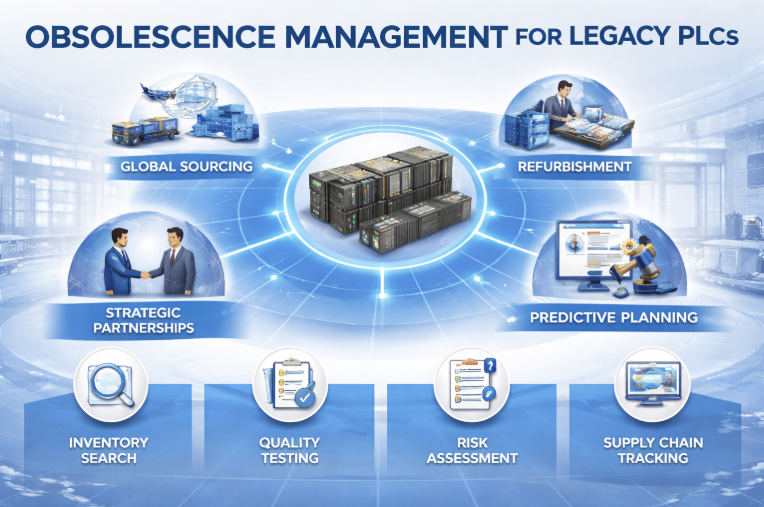
One of the most effective strategies for mitigating the risk of obsolescence is leveraging global sourcing networks. Companies such as Easy Semiconductor Technology (Hong Kong) Limited have established extensive international connections that allow them to locate and procure rare PLC modules across multiple continents. These networks connect suppliers, distributors, and independent repair specialists, enabling access to both new-old-stock (NOS) modules and fully refurbished units.
In addition, digital marketplaces have emerged as vital platforms for sourcing obsolete modules. Online B2B platforms, auction sites, and specialized PLC broker networks provide visibility into available inventories, often at competitive pricing. However, industry experts caution that verification of authenticity and compatibility is crucial, as counterfeit or incompatible modules can compromise system reliability.
Inventory Management and Predictive Planning
Global sourcing is only part of the solution. Manufacturers are increasingly adopting proactive inventory management strategies to anticipate future needs. By analyzing historical failure rates and usage patterns, plants can predict which modules are likely to fail and preemptively secure replacements. This approach reduces emergency procurement, mitigates production disruptions, and optimizes capital expenditure.
Predictive planning also involves collaboration with OEMs and authorized service providers to identify extended support programs. Some manufacturers offer legacy support contracts that include guaranteed module supply or refurbished parts, giving plants additional flexibility while transitioning toward modern automation systems.
Refurbishment and Lifecycle Extension
Refurbishment has emerged as a viable alternative to sourcing new modules. Skilled technicians can restore used PLC modules to operational standards, ensuring compliance with industrial requirements. Refurbished modules often undergo rigorous testing, firmware updates, and component replacement to extend their lifecycle. For many industrial plants, this approach offers a cost-effective and environmentally responsible solution while bridging the gap until a full system upgrade is feasible.
Strategic Partnerships for Obsolescence Management
In 2026, strategic partnerships are proving essential. By collaborating with specialized distributors, service providers, and OEM-approved refurbishers, companies can secure reliable module supplies and technical expertise. Partnerships can also facilitate knowledge transfer, allowing in-house maintenance teams to manage obsolete PLC systems more effectively.
Such collaborations often involve multi-tiered agreements covering procurement, testing, and logistics, ensuring timely delivery of modules regardless of geographic location. Advanced tracking systems, quality assurance processes, and vendor audits further strengthen reliability, helping manufacturers avoid costly downtime and maintain production continuity.
The Role of Technology in Sourcing Efficiency
Emerging technologies are transforming how obsolete PLC modules are sourced globally. Artificial intelligence (AI) and machine learning (ML) algorithms can analyze global inventories, predict supply shortages, and recommend optimal procurement strategies. Blockchain technology is also gaining traction, providing transparent tracking of module origin, refurbishment history, and warranty status.
These innovations enhance confidence in global sourcing while reducing the risks associated with counterfeit or substandard parts. Companies leveraging AI-driven supply chain management are able to respond faster to urgent requirements, allocate resources more efficiently, and maintain operational resilience.
Conclusion
The challenge of sourcing obsolete PLC modules in 2026 is one that demands a global perspective, strategic planning, and innovative approaches. Manufacturers must combine international sourcing networks, predictive inventory management, refurbishment solutions, and strategic partnerships to ensure system reliability.