
 home
home
 Published: May 09, 2026 12:53 PM
 Page View: 103
Programmable Logic Controllers (PLCs) are the core of modern industrial automation, widely used in oil and gas, manufacturing, chemical processing, power generation and other industries. As the "brain" of automation systems, PLCs are responsible for executing control logic, processing input/output signals, and coordinating the operation of various industrial equipment. However, overheating is a common and critical problem that plagues PLC operation—high operating temperatures can lead to unstable system performance, program errors, component damage, and even complete PLC failure. In industrial environments with high temperature, high humidity, and heavy dust, PLC overheating risks are further amplified, directly affecting production continuity and increasing maintenance costs. Therefore, mastering scientific and effective methods to prevent PLC overheating is essential for enterprises to ensure stable operation of automation systems, and it is also a key focus of industrial maintenance and operation management.
Easy Semiconductor Technology (Hong Kong) Limited, a professional provider of industrial automation components and solutions, has long focused on solving common faults of industrial control equipment. Based on years of practical experience in serving global industrial customers, the company summarizes a set of systematic PLC overheating prevention methods, covering equipment selection, installation, daily maintenance and intelligent monitoring, helping enterprises effectively avoid PLC overheating problems and extend the service life of equipment.
The first step in preventing PLC overheating is to select the right PLC model and supporting components according to the actual working environment. Different industrial sites have significant differences in temperature, humidity and dust levels—for high-temperature environments such as smelting workshops and oil refineries, it is necessary to choose PLCs with high-temperature resistance, whose operating temperature range should be at least -10°C to 60°C, or even higher for special scenarios. Easy Semiconductor recommends selecting PLCs with industrial-grade heat-dissipating casings, such as aluminum alloy casings with good thermal conductivity, which can quickly transfer internal heat to the external environment. At the same time, matching high-quality power supplies and cooling fans is crucial; low-quality power supplies are prone to heat generation during operation, while efficient cooling fans can enhance air circulation and reduce the internal temperature of the PLC cabinet.
Scientific installation and layout of PLCs and control cabinets are the foundation of heat dissipation. When installing PLCs, it is necessary to avoid placing them in direct sunlight, near high-temperature equipment (such as boilers, heaters), or in poorly ventilated corners. The control cabinet should be installed in a cool, dry and well-ventilated area, and the internal layout should be reasonable: PLCs should be placed in the upper part of the cabinet (where hot air is easy to rise), leaving at least 10cm of space between the PLC and the cabinet wall and between adjacent devices to ensure unobstructed air flow. In addition, the cabinet door should be equipped with ventilation grilles, and dust-proof nets should be installed to prevent dust from entering and blocking heat-dissipating components—dust accumulation will significantly reduce heat dissipation efficiency and lead to rapid temperature rise of the PLC.
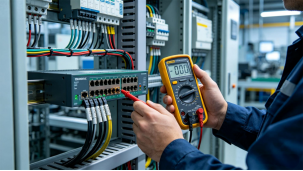
Regular daily maintenance is an effective measure to prevent PLC overheating and eliminate potential hidden dangers. Enterprises should formulate a regular maintenance plan, and maintenance personnel should check the PLC and its cooling system at least once a month. The key inspection items include: cleaning the dust on the PLC casing, heat sink and cooling fan with an air blower or soft brush; checking whether the cooling fan is running normally, and replacing it in time if there is abnormal noise or stop operation; inspecting the tightness of the PLC wiring terminals, as loose terminals will cause poor contact and heat generation; monitoring the operating temperature of the PLC in real time through the control system, and recording temperature data to find abnormal temperature fluctuations in time.
For harsh industrial environments with high temperature and heavy dust, installing additional cooling equipment can further enhance the heat dissipation effect. Common cooling methods include installing air conditioners in the control cabinet, using heat exchangers or cooling fans with adjustable speed. For large-scale automation systems with multiple PLCs, a centralized cooling system can be adopted to maintain the overall temperature of the control room within the safe range. Easy Semiconductor also provides customized cooling solutions for customers, matching suitable cooling components according to the number of PLCs, cabinet size and on-site environment, ensuring efficient and stable heat dissipation.
Intelligent monitoring and early warning are important means to prevent PLC overheating in advance. By installing temperature sensors and intelligent monitoring modules in the PLC control cabinet, real-time temperature data of the PLC and its surrounding environment can be collected and transmitted to the monitoring platform. When the temperature exceeds the safe threshold (usually 55°C for most PLCs), the system will automatically issue an alarm signal, reminding maintenance personnel to take measures such as checking the cooling system or reducing the load of the PLC. Easy Semiconductor’s intelligent monitoring solution can also realize remote temperature monitoring, allowing maintenance personnel to grasp the operating status of the PLC at any time, and deal with potential overheating problems in a timely manner without on-site inspection.
It is worth noting that incorrect operation and improper load control can also lead to PLC overheating. For example, long-term overloading of the PLC (exceeding the rated operating current and power) will cause the internal components to generate excessive heat; frequent program modifications and frequent start-stop operations will also increase the heat generation of the PLC. Therefore, enterprises should standardize the operation of the PLC, reasonably set the control logic, avoid overloading the equipment, and reduce unnecessary start-stop operations.
As industrial automation becomes more and more intelligent, the stability of PLC operation is crucial to the efficiency and safety of production. Easy Semiconductor Technology (Hong Kong) Limited has been committed to providing customers with high-quality industrial automation components and professional technical solutions, helping enterprises solve PLC overheating and other common faults. By following scientific prevention methods—selecting suitable equipment, optimizing installation layout, strengthening daily maintenance, and adopting intelligent monitoring—enterprises can effectively prevent PLC overheating problems, reduce maintenance costs, extend the service life of PLCs, and ensure the continuous and stable operation of industrial automation systems.
A technical manager from a large manufacturing enterprise said: "With the guidance of Easy Semiconductor’s PLC overheating prevention methods, we have significantly reduced the failure rate of PLCs caused by overheating, and the maintenance cost has decreased by 40% compared with before. The professional technical support and practical solutions provided by the company have brought great convenience to our production operation."
In the future, Easy Semiconductor will continue to focus on the development needs of industrial automation, continuously optimize and upgrade PLC-related solutions, integrate more intelligent technologies, and provide more efficient, reliable and professional support for enterprises to prevent PLC overheating and other equipment faults, helping enterprises achieve high-quality and efficient production.