
 home
home
 Published: Apr 02, 2026 09:05 PM
 Page View: 198
FOR IMMEDIATE RELEASE
HONG KONG, April 2, 2026 — Easy Semiconductor Technology (Hong Kong) Limited (“Easy Semiconductor”), a leading provider of advanced semiconductor and industrial automation solutions, today publishes a comprehensive comparison of the three foundational industrial control systems: Distributed Control System (DCS), Programmable Logic Controller (PLC), and Fieldbus Control System (FCS). This in-depth analysis is designed to help industrial manufacturers, plant operators, and technology decision-makers navigate the complexities of industrial control, enabling smarter investment decisions amid the global shift toward Industry 4.0 and smart manufacturing.
As the global machine automation controller market continues to expand—projected to grow from USD 49.04 billion in 2026 to USD 94.18 billion by 2035 at a CAGR of 7.52%—understanding the unique capabilities of DCS, PLC, and FCS has become critical for businesses seeking to enhance productivity, reduce operational costs, and maintain competitive advantage. Easy Semiconductor’s team of industrial automation experts has compiled data-driven insights to demystify the differences between these systems, focusing on architecture, performance, scalability, cost-efficiency, and real-world application scenarios.
Each industrial control system has evolved to address distinct operational needs, with technological advancements driving convergence in recent years. Easy Semiconductor’s experts outline their core purposes and evolutionary trajectories:
Programmable Logic Controller (PLC): Developed in the late 1960s to replace unreliable relay control systems in the automotive industry, PLCs are designed for discrete control, sequence control, and high-speed switching operations. Featuring a modular I/O structure, deterministic execution cycles (typically within 0.1 seconds), and support for IEC 61131-3 programming languages, PLCs offer exceptional flexibility for small to medium-sized automation tasks. They excel in applications requiring real-time responsiveness and strong anti-interference capabilities, making them a staple in discrete manufacturing.
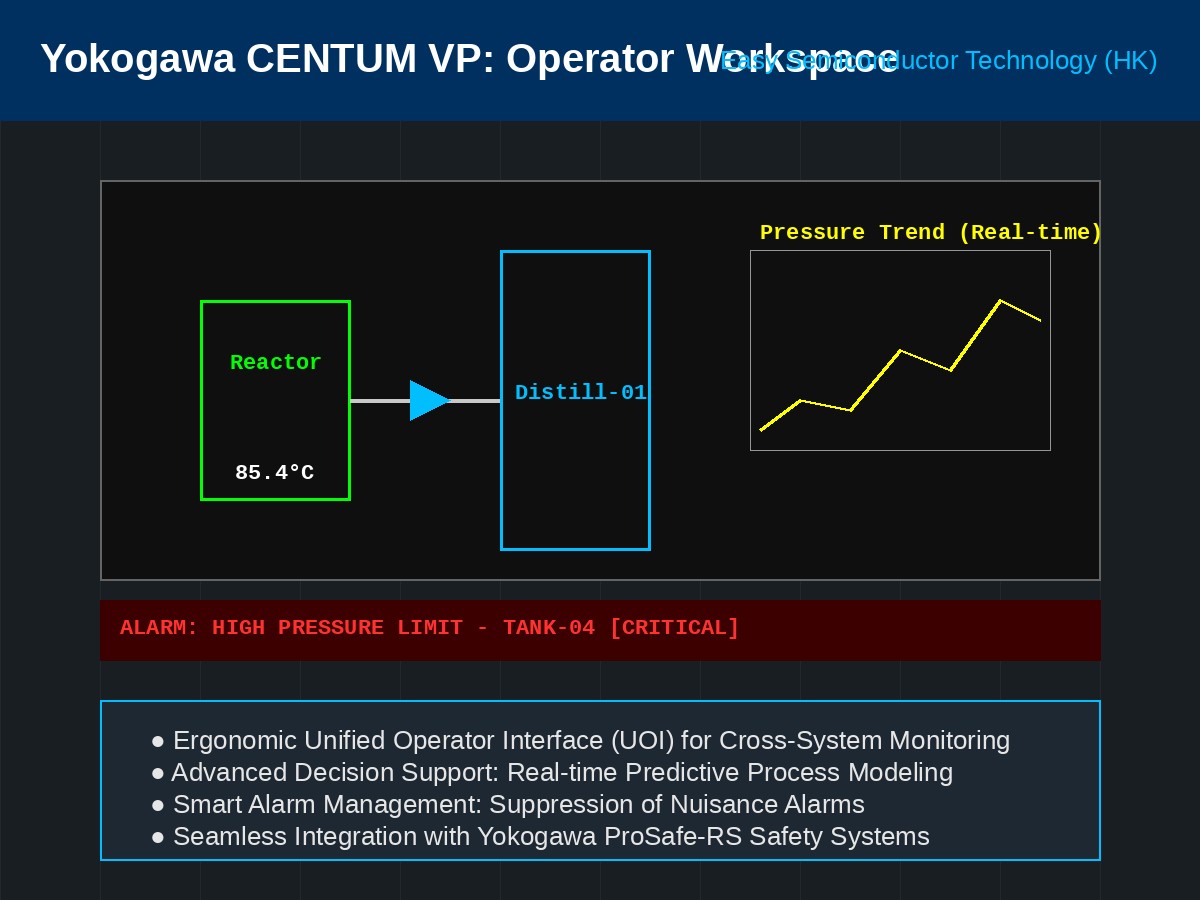
Distributed Control System (DCS): Emerging in the mid-1970s for large-scale continuous process industries, DCS follows a “centralized monitoring, distributed control” philosophy. With a hierarchical tree topology integrating field instrumentation, distributed controllers, operator stations, and information layers, DCS systems specialize in managing thousands of I/O points with high reliability and advanced process control capabilities. The global DCS market is projected to reach USD 227.5 billion in 2026, with亚太地区 leading as the largest consumer market, accounting for approximately 33% of global share. Modern DCS systems increasingly integrate AI, cloud-edge collaboration, and digital twin technologies to enable autonomous decision-making and virtual debugging.
Fieldbus Control System (FCS): A revolutionary upgrade to traditional control systems since the 1990s, FCS decentralizes control functions to smart field devices (e.g., intelligent transmitters, valve positioners) via open, digital fieldbuses. By eliminating analog signal transmission, FCS reduces wiring costs by up to 60%, improves measurement accuracy (up to ±0.1%), and enables seamless interoperability between devices from different manufacturers—aligning perfectly with IIoT and smart manufacturing goals. FCS systems also support predictive maintenance through real-time device diagnostics, enhancing long-term operational efficiency.
Easy Semiconductor’s comparison highlights five critical dimensions to help organizations select the optimal control system for their specific needs, aligning with 2026 industry trends and market demands:
PLCs adopt a “bottom-up” control structure, with a single controller as the core and modular I/O extensions for localized real-time response. They excel at sequential logic, high-speed counting, and simple PID control, often serving as standalone systems or lower-level execution units for larger DCS or FCS deployments.
DCS uses a “top-down” hierarchical structure, divided into field, control, operation, and information layers. Its core strength lies in centralized monitoring and distributed control, with redundant communication buses and dedicated controllers for complex loop control (e.g., multi-variable predictive control) in large-scale continuous processes. Modern DCS platforms are increasingly built on containerized, micro-service architectures, with edge computing nodes handling advanced process control tasks to reduce reliance on central clouds.
FCS features a fully distributed architecture, removing the traditional controller-I/O-instrument hierarchy by embedding control functions directly into field devices. Digital, bidirectional fieldbuses connect devices, enabling “control at the field” and eliminating A/D-D/A conversion errors, while open standards (e.g., Foundation Fieldbus, Profibus) ensure interoperability across vendor devices.
PLCs offer ultra-fast response times and strong anti-interference capabilities, ideal for high-speed discrete tasks. Redundancy is optional but requires additional hardware, increasing costs—making them best suited for applications where continuous operation is not mission-critical.
DCS prioritizes stability and reliability, with built-in redundancy for controllers, communication buses, and power supplies as standard. It supports thousands of I/O points, precise analog signal processing, and seamless fault-tolerant switching—critical for continuous processes like oil refining, power generation, and petrochemicals, where unplanned downtime can result in significant losses. Modern DCS systems also integrate zero-trust security architectures, with hardware-level可信根 (Root of Trust) embedded in controller firmware to enhance industrial network security.
FCS delivers high measurement accuracy and reliability through digital signal transmission, reducing signal attenuation and interference. It supports predictive maintenance via real-time device diagnostics and enables easy expansion with plug-and-play functionality, making it a preferred choice for smart factories and IIoT-integrated plants.
PLCs are highly flexible and easy to expand, with modular designs that allow for quick I/O additions or function upgrades. They are well-suited for small to medium-sized systems and mixed discrete-continuous processes, such as packaging machinery and food processing lines.
DCS is scalable for large-scale systems, supporting thousands of I/O points and multi-site integration. However, its structured architecture makes it less flexible for frequent configuration changes, as it is optimized for stable, long-term continuous operations—common in power plants and large chemical facilities.
FCS offers exceptional scalability and flexibility, with open standards that enable seamless integration of devices from different vendors. Its distributed design allows for incremental expansion without disrupting existing operations, making it ideal for smart manufacturing environments where adaptability is key.
PLCs are the most cost-effective option for small to medium-sized applications, with lower initial investment and maintenance costs. They have a shorter lifecycle (5-7 years) but are easy to replace and upgrade, making them a cost-efficient choice for businesses with evolving discrete manufacturing needs.
DCS requires a higher initial investment due to its complex architecture and redundant components. However, it has a longer lifecycle (10-15 years) and lower long-term maintenance costs for large-scale processes, justifying the upfront expense—especially in industries like petrochemicals and power generation where stability is paramount.
FCS has a moderate initial investment but significantly reduces wiring and installation costs. Its digital architecture simplifies maintenance and extends device lifecycles, making it cost-effective for long-term smart manufacturing deployments. For example, FCS implementations in chemical plants have been shown to reduce installation time by 30% and long-term maintenance costs by 25% compared to traditional systems.
Based on 2026 industry trends and real-world deployments, Easy Semiconductor’s experts outline the optimal use cases for each system:
PLC: Discrete manufacturing (automotive assembly, packaging machinery, food processing), small-scale batch control, and as a lower-level controller for DCS/FCS systems. PLCs are also widely used in auxiliary车间 of power plants, such as water treatment and coal transportation systems, where sequential control is the primary requirement.
DCS: Large-scale continuous processes (petrochemicals, power plants, metallurgy, pharmaceuticals), where stability, redundancy, and complex loop control are critical. DCS is also increasingly used in green energy applications, such as green hydrogen plants, where it must handle intermittent renewable energy fluctuations and safety monitoring challenges.
FCS: Smart manufacturing, IIoT-integrated plants, and processes requiring high flexibility and predictive maintenance (e.g., modern chemical plants, smart factories). FCS is particularly well-suited for applications where device interoperability and remote diagnostics are essential, such as hazardous areas requiring minimal on-site intervention.
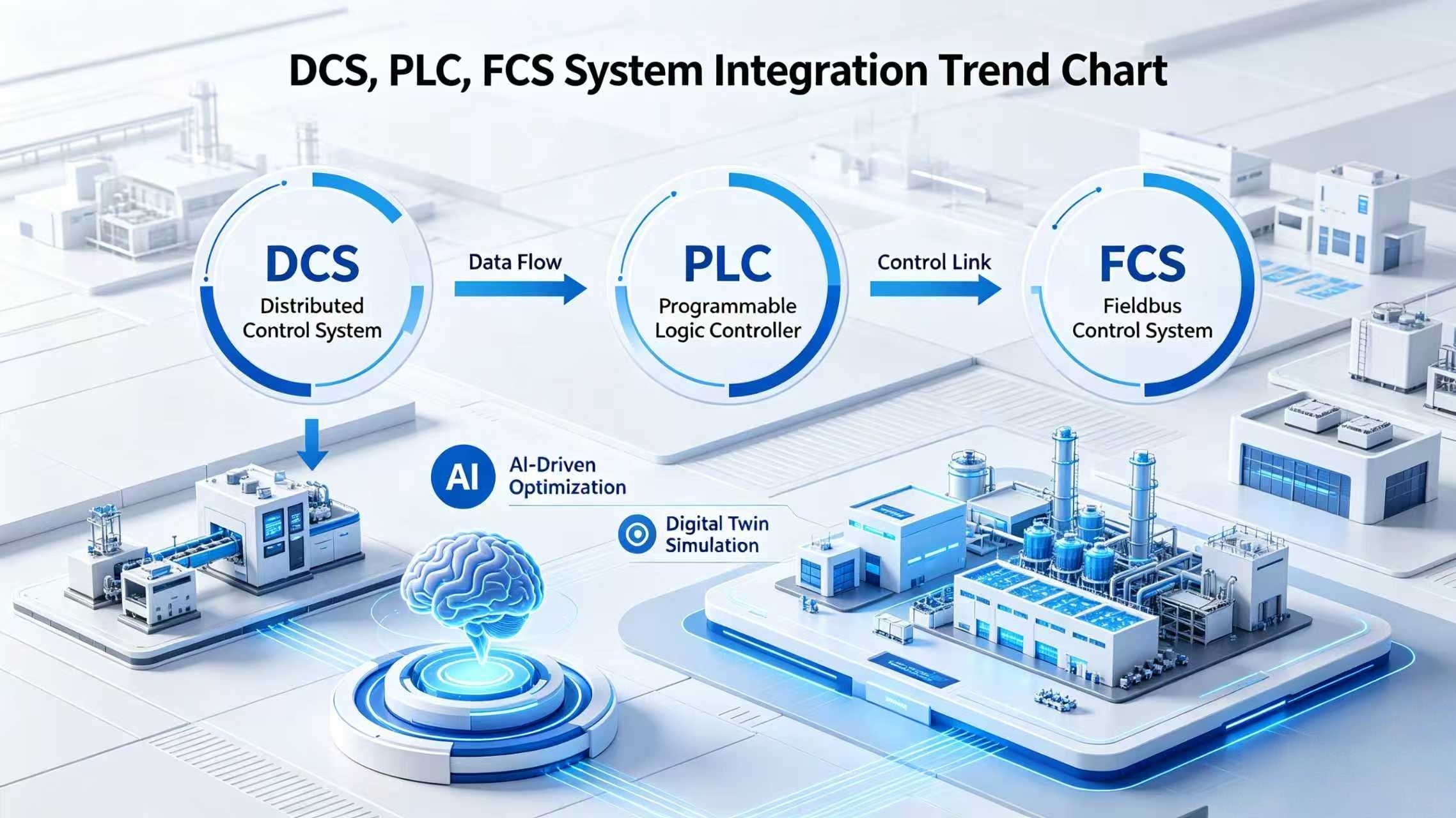
According to Easy Semiconductor’s senior technical director, the lines between DCS, PLC, and FCS are increasingly blurring, with a clear trend toward convergence. Modern high-end DCS systems now integrate PLC logic engines and FCS fieldbus interfaces, while advanced PLCs offer DCS-level redundancy and FCS compatibility. FCS, meanwhile, is becoming the backbone of smart manufacturing, integrating with AI, digital twins, and cloud platforms via OPC UA over TSN.
“In 2026, industrial control systems are no longer siloed solutions—they are integrated components of a larger smart manufacturing ecosystem,” said the senior technical director at Easy Semiconductor. “DCS, PLC, and FCS each have unique strengths, but their convergence is enabling businesses to build more agile, efficient, and intelligent industrial operations. Our goal with this comparison is to help organizations leverage these technologies to drive innovation and competitive advantage.”
Easy Semiconductor offers tailored semiconductor and industrial automation solutions that integrate seamlessly with DCS, PLC, and FCS systems, helping clients leverage the latest control technologies to achieve their smart manufacturing goals. With a focus on innovation and customer-centricity, the company continues to support industrial transformation across global markets, particularly in high-growth regions like Asia-Pacific.