



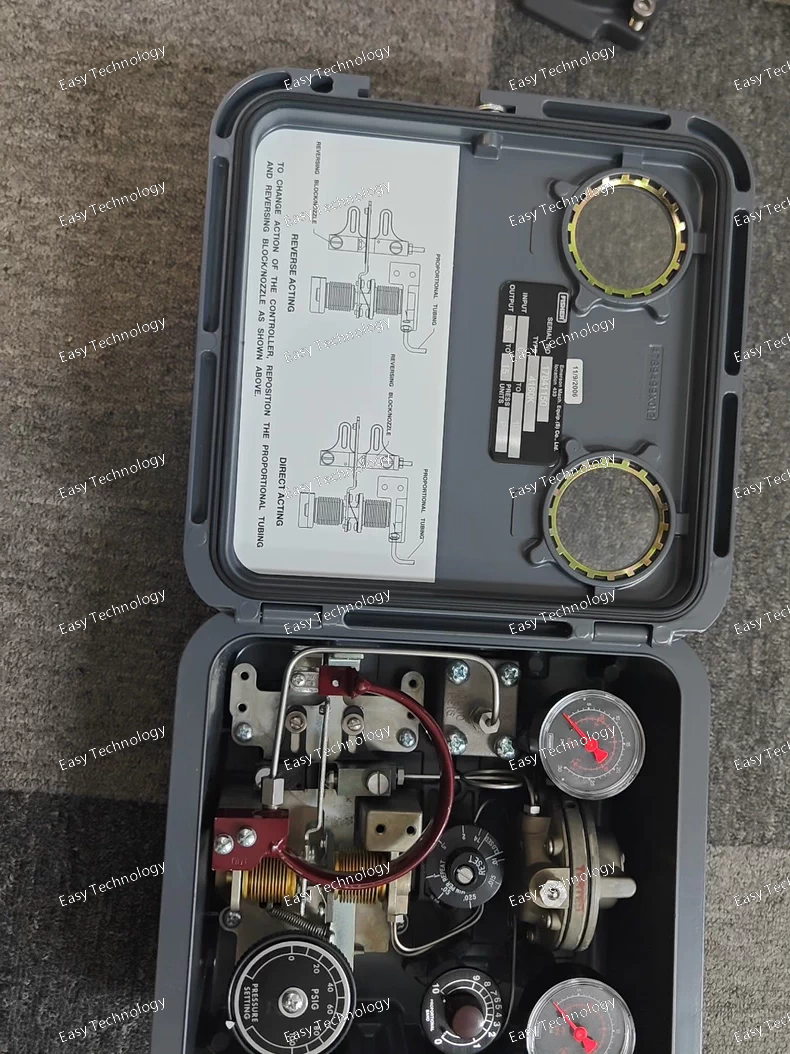
Technical Specifications Category Specification Model 4160K Type Pneumatic Force-Balance, Displacer-Type Measurement Principle Buoyancy Output Signal 3 to 15 psig (0.2 to 1.0 bar) Supply Air Pressure 20 psig (1.4 bar) minimum, 35 psig (2.4 bar) maximum. A 20-35 psig supply is required for proper operation. Air Consumption Approximately 0.5 SCFM (14 standard liters per minute) at maximum output. Span Adjustment Typically from 5 to 50 inches (127 to 1270 mm) of H₂O buoyancy force. Adjustable via range spring. Zero Adjustment External adjustment provided. Accuracy Typically ±0.5% of span. Repeatability Typically ±0.1% of span. Materials of Construction Body/Bonnet: Cast Iron or Ductile Iron (epoxy coated). Internals & Displacer: 316 Stainless Steel standard; other materials like Monel, Hastelloy available. Process Connections Body: 2-inch NPT standard. Displacer Chamber: 1½-inch or 2-inch NPT, or flanged options (e.g., 150# RF). Ambient Temperature Limit -20° to +150°F (-29° to +66°C) Process Temperature Limit Up to +750°F (+399°C) with extended bonnet and appropriate seals. Approvals Intrinsically safe for Class I, Division 1, Groups B, C, and D hazardous locations. (Commonly approved by FM, CSA, etc.).